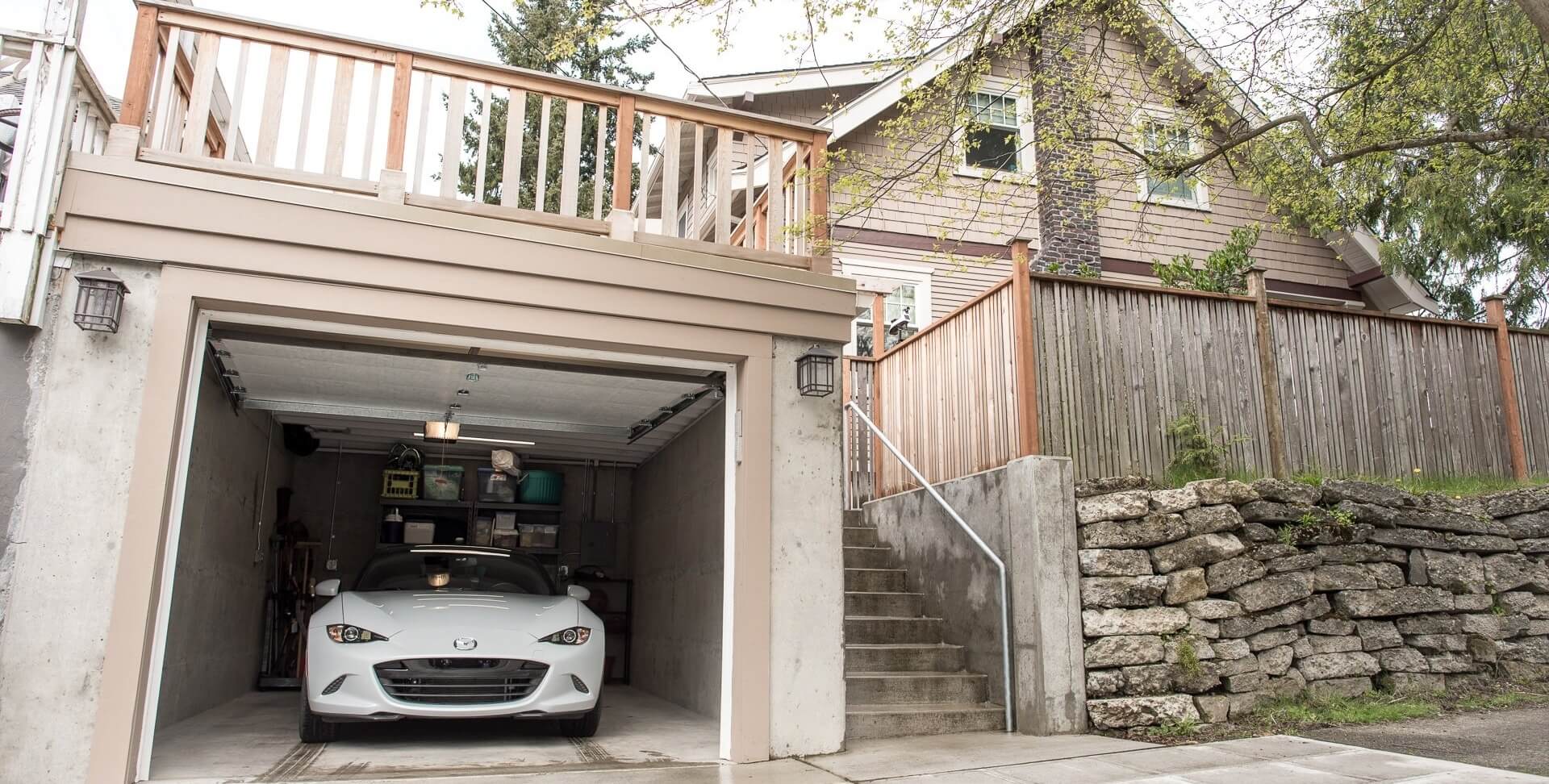
If you have big plans for your home redesign, it can be the right time to consider a house-lift.
Namely, if you’re fresh out of a home purchase, it’s only natural to have concerns about home safety. But whether or not you should lift a house depends on where your house is sited.
Does it stand on mountainous terrain? Is it situated in an area where flooding is a common concern?
And here’s an interesting part — if you’re Seattle-based, your answer to at least one of these questions will be positive.
As an oceanic port nestled between Puget Sound and Lake Washington, Seattle is a flood-prone area.
Getting a lifting company to jack up your house is how you work around any flooding issues and avoid any foundation damage to your home.
Yet before you get your lift-up project moving, here are a few useful expert tips and examples.
Colonial Style House

You may want to do a significant front and rear remodel when raising your house. If moving things around sounds right for you, you can hire contractors to revise your floor plan.
For example, if you want more living space, a deck would be an option. Or, if you’re after curb appeal, you can have rafter tails made for an attractive wraparound porch.
The elevated house above is an excellent example of how this can be done.
The problem with structural changes is that they raise the costs of house lifting projects. However, the price to lift will be more reasonable if you stick to minimal alterations.
- Moving your entrance and creating alternative access to your home is what you can’t go without. Your ground-level entry will have to be elevated with the addition of a new staircase.
- Using the existing foundation is another way to lower costs, but not everyone will do this. It will depend on the condition and the type of your foundation (pilings, slab-on-grade, basement etc).
Contemporary Style House

You can have your house elevated on stilts, as shown on the lift-up example above. A deck like this can increase usable square footage and let you enjoy outdoor activities.
Know, however, that simpler house designs will be easier to lift. Stepping away from square or rectangular shapes can complicate the house raising project.
- Irregular house shapes call for separate lifting — think wings, attached garages, porches, and other additions. They can make the lift-up more complicated, though not unmanageable.
- Your house will be more difficult to raise if it’s on the large side. Two-story homes are more difficult to stabilize, and you’ll need more jacks to raise them.
Special note: If you’re not a fan of piles, you can cover them up using stucco, brick or fiberglass sleeves.
Farmhouse Style House

Some houses may call for moderate house lifting like the one in the picture above. Again, this will depend on your house positioning and your house’s original elevation.
According to the Federal Emergency Management Agency (FEMA), you should include at least 1 foot of freeboard when doing a lift-up. Even better, opt for going 3 or 4 feet above the existing ground level at the least to be on the safe side.
Special note: Check with your local authorities before committing to raising a house. You need legislative approval with the Seattle city’s permitting department for a given amount of elevation.
Craftsman Style House

Breakaway walls around the foundation’s perimeter represent a highly functional solution.
They are flood defense walls that get installed between the piles at the ground level. These walls are perfect for those who intend to raise a house more than 4 feet above the existing grade.
And the best part — they come with multiple benefits. Breakaway walls or enclosures:
- Allow for a moderate degree of penetration of floodwaters and wind. While these walls get swept away during a flood, the piling and your living space remain intact.
- Provide under-deck storage or an alternative basement for storing outdoor paraphernalia. Note that you can also use them to install a front or a side garage entry.
Why Lift a House?
Homes in susceptible areas can suffer erosion and water damage in times of floods. A house is even more vulnerable if it’s positioned at a critical low point on a property.
This is where house lifting comes into play — as an effective way to prevent damage to your house. Given that Seattle is prone to riverine, coastal, and urban flooding, house lifting may be just what you need.
The table below shows 73% of Seattle territory is a flood-prone area that holds 328.81 acres of property.
| Land Use in Flood Prone Areas | |||
| Acres | % Seattle | % Area | |
| Seattle | 53178.37 | 100% | |
| Flood Area (1996 FIRM & other) | 388.39 | 0.37% | 100.00% |
| Property in area | 328.81 | 0.62% | 84.66% |
| Commercial/Mixed-Use | 18.35 | 0.03% | 4.72% |
| Easement | 0.00 | 0.00% | 0.00% |
| Industrial | 50.06 | 0.09% | 12.89% |
| Major Institutions | 47.45 | 0.09% | 12.22% |
| Multi-Family | 13.82 | 0.03% | 3.56% |
| Parks/Open Source | 72.77 | 0.14% | 18.74% |
| Reservoirs | 0.81 | 0.00% | 0.21% |
| Single Family | 69.90 | 0.13% | 18.00% |
| Unknown | 0.62 | 0.00% | 0.16% |
| Vacant | 55.03 | 0.10% | 14.17% |
| Right of Way in Area | 59.58 | 0.11% | 15.34% |
To ensure your lift-up aligns with state regulations, you should get familiar with a few rules first.
When raising a home, the two key terms below are critical to understanding.
- The base flood elevation (BFE). This is an estimated baseline of how high water may rise during the base flood.
- The flood protection elevation (FPE). It’s the elevation to which a house should be lifted to prevent any flood damage. Namely, this is one foot or more above the BFE.
How Does House Lifting Work?
When lifting a house, you need to raise it to the FPE prescribed by the Federal Emergency Management Agency (FEMA).
Talk to your contractors and pick a house elevation technique that best suits your needs. However, this is how a house-lift typically looks like.
- Before lifting the house, engineers will work out the mass and stability of the structure.
- They will investigate soil and the structural materials used in your house construction.
- Next, you’ll sit down with your contractors to outline a development plan. This is how you’ll determine the cost to lift and the timeframes needed to raise the house.
- Before the actual raise, the lifting company will dig out the topsoil and separate the foundation from the rest of the house.
- Finally, the house is lifted. Manual jackscrews, steel beams, or hydraulic jacks are used to provide even house support so all the walls and floor joists stay in place.
Special note: If your home has suffered extensive damage, having a basement is against the rules. As defined under the NFIP a basement is “any area of the building having its floor subgrade on all sides.” Such basements need to be filled in as part of the elevation project.
Does Lifting a House Require a New Foundation?
Again, this depends on your unique situation. A building engineer will make a judgment call about whether the existing foundation can withstand the elevated house’s weight and the forces of the elements.
If not, cutting back the existing slab and building a new foundation will be necessary. This process is illustrated in the image below.

Screenshot from: fema.gov
Notably, the type of foundation you can use will depend on the house lifting technique you use.
- If the foundation stays in place when you’re raising a house, you’ll have more options regarding what you can put on top of it.You can choose between posts, concrete columns, separate piers, or continuous walls. This option is available for houses initially built on open foundations, crawl space, or basement.
- If the foundation is moving up with the house, the house lifting will be much easier. When using this technique to lift the house, a concrete slab is typically used.This technique is more suited to homes with slabs that are both parts of the foundation and the floor structure (floor joists included and all).
What’s the Cost of Raising a House?
The cost to lift your house will vary depending on several factors. Expect to pay between $3,001 and $9,215 to raise the concrete slab alone.
Your total house raising costs will depend on how many feet up you’re going and whether or not you’re replacing the foundation.
Other costs to factor in are permit, grading, and excavation costs. Also, expect structural engineer fees to range between $100 to $200 per hour.
Furthermore, a new foundation can cost you anywhere from $20,000 to $100,000, depending on the type you choose.
To illustrate, a pier and beam foundation can cost you from $8,000 to $15,000, while the basement foundation will stand anywhere between $10,000 and $175,000.
The costs quickly add up when you count in pipes, plumbing, and electrical expenses.
On top of that, liability insurance can come under your house lifting expenses.
Homeowners who wish to remove any construction-related risks can file for Washington builders risk insurance. This liability insurance will keep you covered for property damage and any bodily injury to yourself and others.
Choose a Dependable Contractor for Your House Lifting Project
All said and done, lifting your house is one of the touchiest large-scale home remodels — not exactly easy on the house nor the homeowner. We hope our lifted house examples and expert tips made the ordeal at least that bit easier.
Choosing among the sea of contractors is another thing that doesn’t come easy. Lifting your home is a matter of trust — you need to know you’re leaving your home in good hands. After all, you still want your property in one piece after the lift-up is done.
The best way to safeguard your home is to hire a licensed general contractor or designer.
The team over at CRD is sure not to lack in one aspect, and that is experience.
We’ve been serving the Seattle community for 40 years, helping city residents with design and building issues.
So, if you’re after more inspiration, browse our work portfolio. Or better yet, contact our friendly team of experts if you have any case-specific questions. As a team that’s seen many old Seattle homes get remodeled, we’re bound to answer them.
Featured Image: Unsplash by Irina Murza