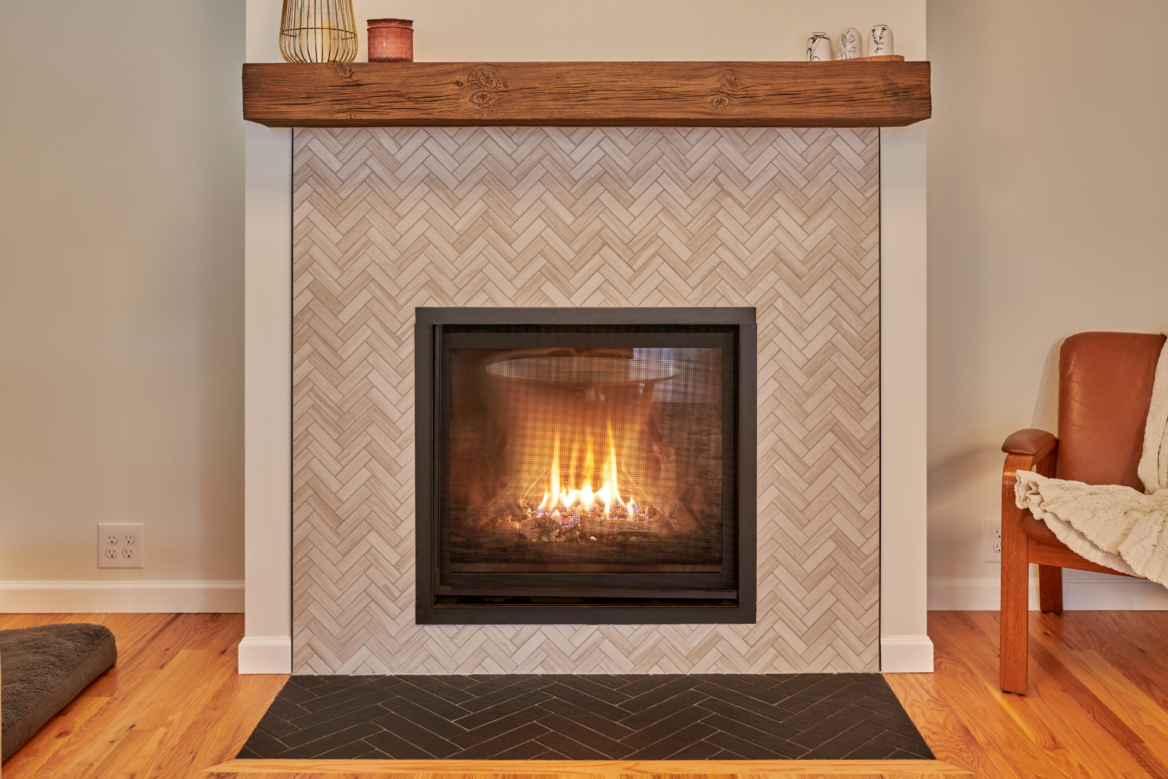
A fireplace naturally draws the eye and anchors the space, but a thoughtfully designed tile fireplace turns it into a true architectural statement. Whether you’re remodeling a craftsman in Ballard or updating a mid-century home in Lake City, a tile fireplace can completely transform the feel of your living room.
As a designer, I often tell clients that the fireplace is an opportunity. It’s a vertical canvas where we can introduce texture, depth, warmth and personality while grounding the space.
Here’s how to approach your tile fireplace design so it feels intentional, timeless and beautifully integrated into your Seattle home.

Tile Fireplace Inspiration for Every Design Style
Why Choose a Tile Fireplace?
Tile offers flexibility that other materials simply don’t, especially in terms of versatility. A tile fireplace can feel modern, rustic, traditional or eclectic depending on the material and layout.
Here are just a few reasons why we love tile for a fireplace refresh:
- Durability and heat resistance
- Endless design options
- Easy maintenance
- Ability to add texture and color
- Compatibility with many architectural styles
In Seattle homes especially, where living rooms often serve as cozy gathering spaces during long winters, a tile fireplace adds both visual warmth and real functionality.
Start with the Style of Your Home
Before selecting tile, we always assess the architecture and design style of the home.
Modern Homes
For a home that skews more modern, we often recommend:
- Large-format porcelain slabs
- Minimal grout lines
- Matte finishes
- Neutral tones like warm gray or taupe
We also encourage homeowners to incorporate a floor-to-ceiling fireplace in a modern space to create drama without clutter.

Craftsman or Traditional Homes
In older Seattle homes, we typically suggest:
- Handmade or artisan tile
- Subtle texture
- Soft earth tones
- Framed surrounds with detailed trim
This approach enhances architectural detail rather than competing with it, leading to a more cohesive space.
Eclectic or Maximalist Interiors
For clients embracing the 2026 design trend of more texture and more authenticity, a tile fireplace can include:
- Natural stone
- Zellige tile
- Textured ceramic
- Warm, aged finishes
These materials add character and help the fireplace feel grounded and lived-in. Plus, they age beautifully.
Consider Scale and Proportion
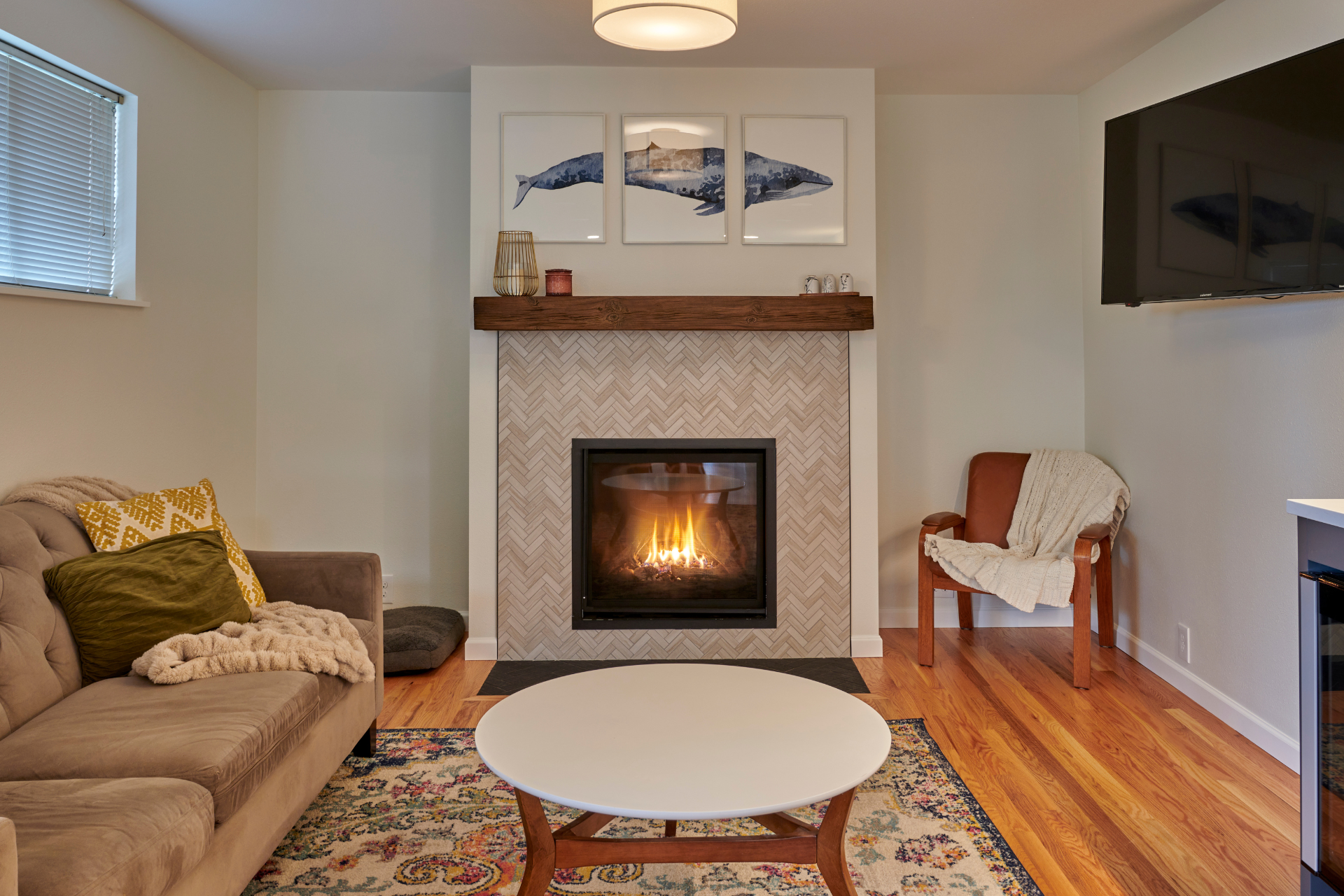
A common design mistake that we see is ignoring the scale of the fireplace. For example, in rooms with high ceilings, a short fireplace surround can feel underwhelming. And on the other hand, oversized tile or bold patterns can overwhelm the space in smaller living rooms.
Be sure to get clear on key information, such as:
- How tall are the ceilings?
- Is there built-in cabinetry nearby?
- What is the width of the hearth?
- Will a TV be mounted above?
This will help you balance proportion with impact during the design process.
Full Height vs. Framed Surround
There are two primary design directions for a tile fireplace:
1. Floor-to-Ceiling Tile Fireplace
This creates a dramatic focal point and works beautifully in more contemporary homes. It draws the eye upward and makes the living room feel larger.
2. Framed Tile Fireplace Surround
Here, tile is contained within a mantel or millwork surround. This approach works well in traditional or transitional spaces where architectural detail matters.
Both options can be stunning, so the key is matching the fireplace design to the overall aesthetic of your home.

Texture Is Everything
In 2026, we’re seeing a shift toward materials that feel real, worn and tactile—and a gorgeous tile fireplace is the perfect place! We encourage you to consider:
- Textured stone tile
- Vertical stacked tile
- Hand-glazed ceramic
- Subtle pattern or movement
And be sure to keep in mind that the texture will catch light differently throughout the day, adding depth and dimension to your space.
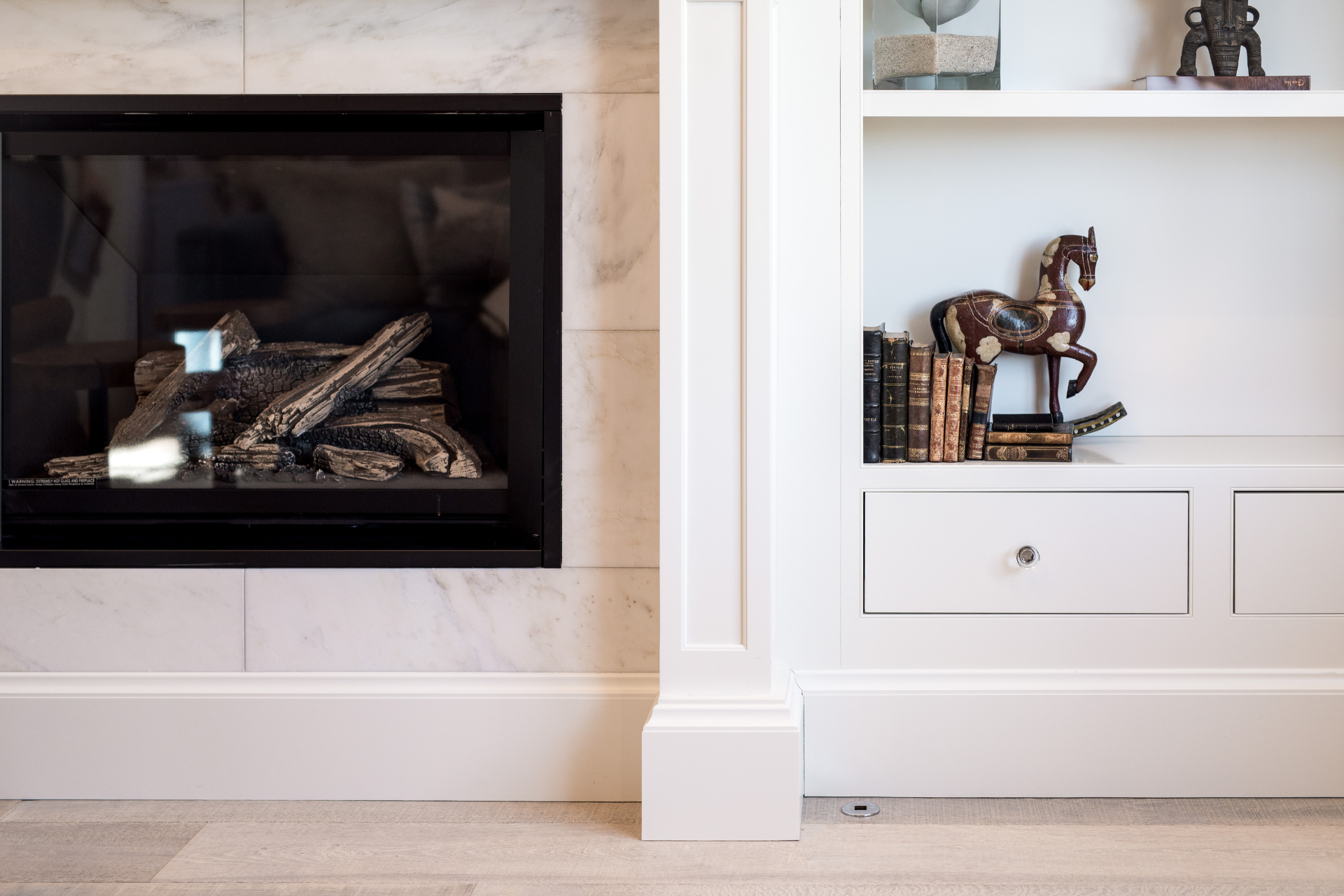
Pairing Tile Fireplace Design With Built-Ins
In many of our Seattle remodels, fireplaces are often flanked by built-in cabinetry. To get the best possible results, we encourage you to factor in the relationship between the cabinetry and tile. For example:
- Simple cabinets pair well with textured tile
- Detailed cabinetry works best with quieter tile
- Mixed materials require balance
Tile Fireplace Maintenance
And lastly, another advantage of a tile fireplace is ease of maintenance! Porcelain and ceramic tile are especially low-maintenance, while natural stone requires sealing, yet offers unmatched depth.
A tile fireplace is more than a surround — it’s a design opportunity. It anchors your living room, sets the tone for the space, and adds both visual and tactile warmth.
At CRD Design Build, we approach fireplace design holistically. From layout and built-ins to material selection and architectural detailing, our team will ensure that your tile fireplace enhances the entire room.Planning a Seattle remodel and want a fireplace that feels intentional, elevated and timeless? We’d love to help. Schedule your complimentary discovery call and let’s design a living room you’ll love gathering in.