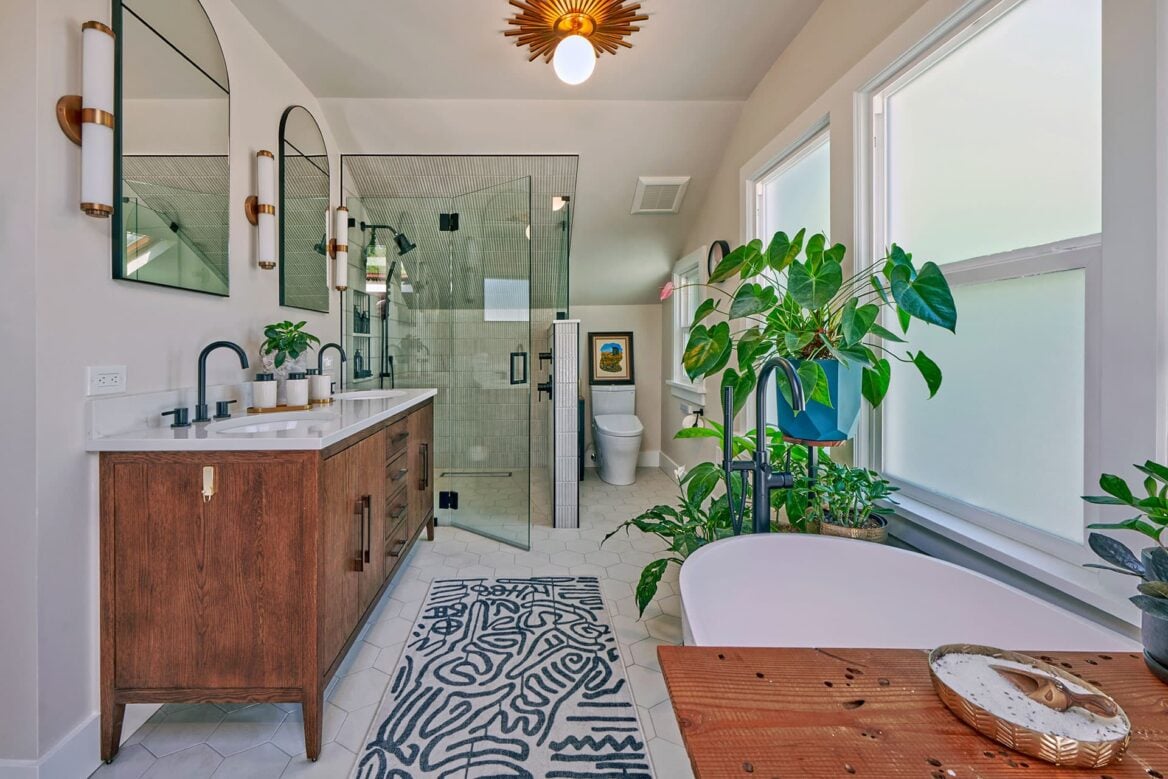
Proper bathroom ventilation is one of the most overlooked—but absolutely critical—parts of a home remodel. It’s not just about eliminating odors or clearing steam from the mirror. Done right, a well-placed bathroom air vent helps prevent mold and mildew, protects your finishes and keeps the entire space healthier and more comfortable.
At CRD Design Build, we often work with Seattle homeowners on bathroom remodels where previous vent placement either didn’t meet code or simply wasn’t doing its job. So today let’s break down the essentials of bathroom air vent placement: where it should go, why it matters and how to avoid common mistakes.
Bathroom Vent Placement: What to Know for Proper Airflow and Code Compliance
Why Bathroom Vent Placement Matters
Every bathroom, no matter how small, needs mechanical ventilation unless it has a large operable window (and even then, fans are typically still required by code in Seattle and King County). Moisture from daily showers, hot baths and even just hand-washing can quickly build up in a poorly ventilated bathroom, leading to:
- Mold and mildew growth
- Warped cabinetry and trim
- Peeling paint and cracked grout
- Musty odors
- Poor indoor air quality
Installing an exhaust fan helps remove this humid air, but it’s not just about having a fan—where it’s placed makes all the difference.
Best Practices for Bathroom Vent Placement
1. Locate the Vent Near the Shower or Tub
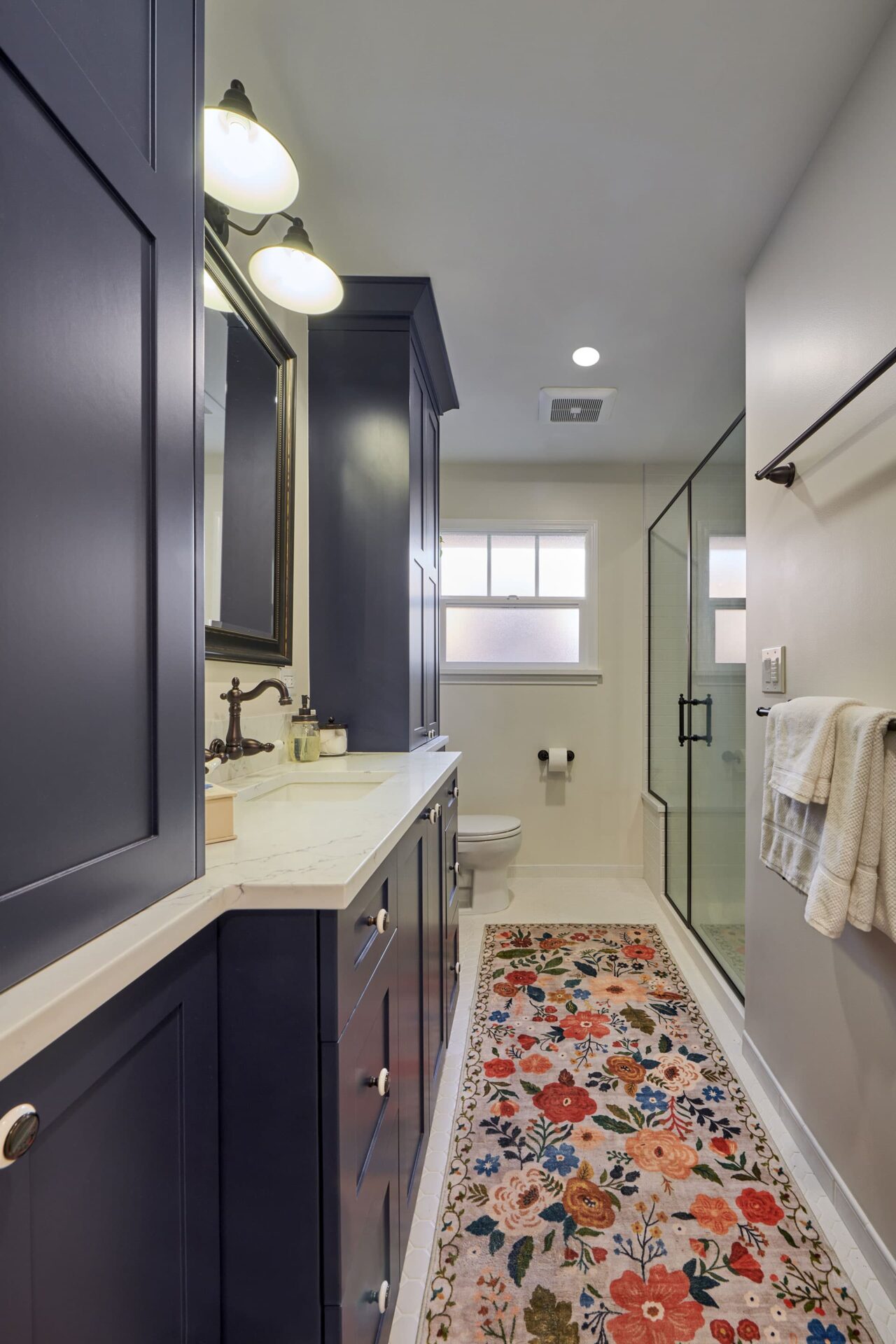
This is the number one rule in most bathrooms. The vent should be placed directly above or near the primary moisture source, which is typically the shower or bathtub.
By installing the exhaust fan here, you maximize its ability to pull humid air out quickly, before it spreads through the rest of the room.
2. For Larger Bathrooms, Consider Multiple Vents
If your bathroom has a separate tub and shower, a water closet or is over 100 square feet, a single fan might not be enough. In these cases, dual exhaust fans or a multi-port ventilation system may be required for full coverage.
We recommend this placement:
- One vent over the shower
- One in the toilet alcove
- A third near the vanity for general ventilation
3. Avoid Placing Vents Directly Over Toilets or Vanities (Unless Necessary)
While it’s common to place a vent near the toilet for odor control, moisture should take priority when choosing placement. Focus on extracting warm, damp air before it has time to condense on surfaces.
If odor control is also a concern, consider adding a secondary fan or using a variable-speed fan with a continuous low setting.
Ceiling vs. Wall Vent Placement
Ceiling-Mounted Vents
Most bathroom fans are ceiling-mounted, which makes sense because warm, moist air rises. These are best placed directly above the shower or center of the room and vented through the attic or roof.
Pros:
- Effective at removing humid air
- Clean, discreet look
- Ideal for single-level homes or homes with attic access
Wall-Mounted Vents
Wall-mounted bathroom vents are less common but sometimes necessary—particularly in:
- Homes without attic access
- Bathrooms with sloped or vaulted ceilings
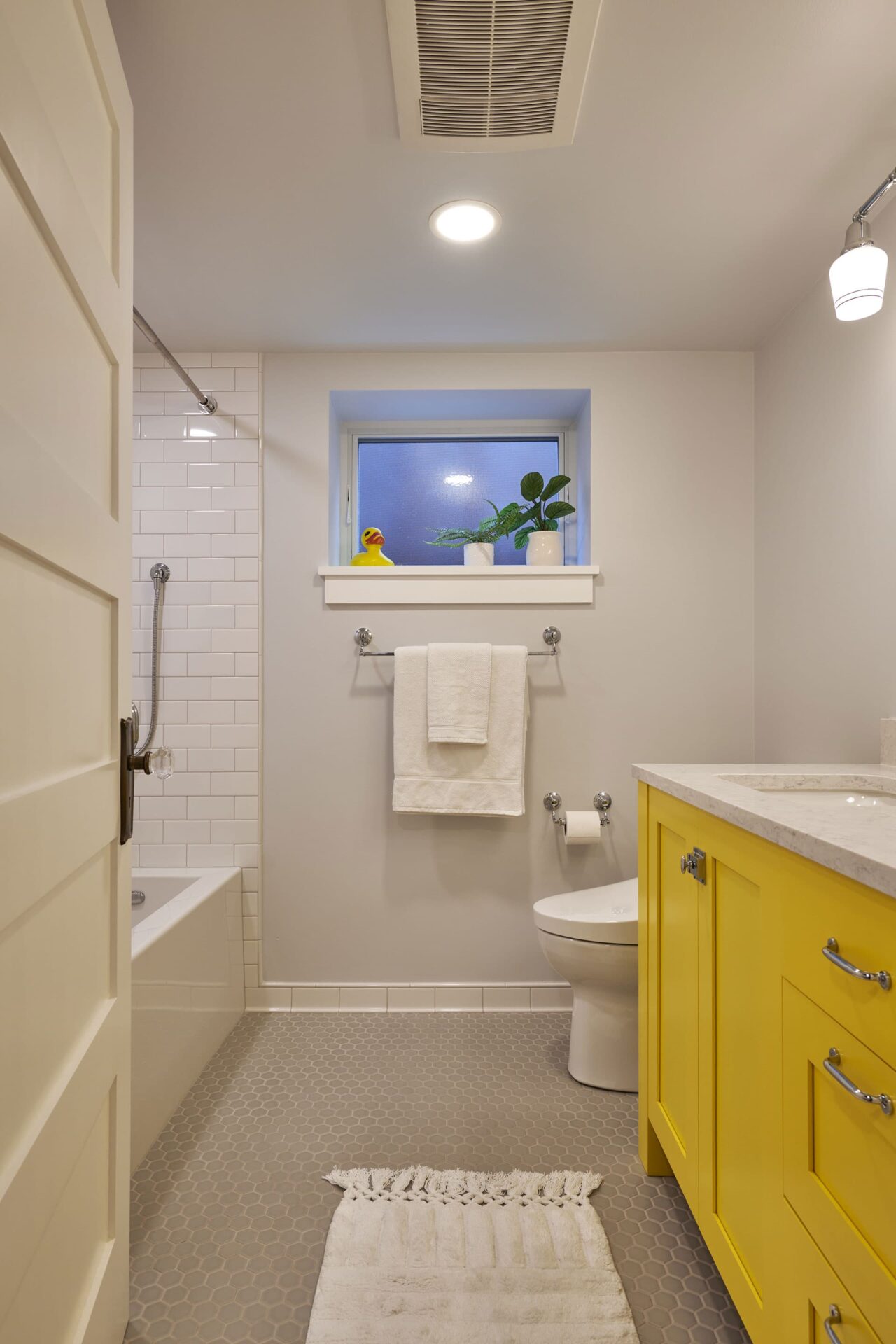
- Basement bathrooms
In these cases, the fan is installed on an exterior wall and vents directly out. It’s crucial that these fans are installed at the correct height and sealed properly to prevent backdrafting or leaks.
How Bathroom Ventilation Ties into Building Codes
In Seattle and most areas of Washington, the International Residential Code (IRC) and Washington State Energy Code require:
- Exhaust fans in all full bathrooms
- Ventilation rates of at least 50 CFM (cubic feet per minute) intermittent or 20 CFM continuous
- Direct venting to the outside—never into an attic, crawl space or wall cavity
- Backdraft dampers to prevent outdoor air from coming in
If you’re remodeling, your contractor must ensure your fan’s placement and capacity meet these code requirements.
Tips for Choosing the Right Exhaust Fan
1. Pick the Right Size
Choose a fan that can move enough air for the size of your bathroom. A good rule of thumb:
1 CFM per square foot of bathroom space (minimum). For example, a 60 sq. ft. bathroom should have a fan rated for at least 60 CFM.
2. Consider Fan Noise
Fan sound is measured in sones. Lower sones = quieter fans.
- Under 1.5 sones is quiet
- 2.0–3.0 sones is moderate
- Above 3.0 may be noticeably loud
3. Look for Smart Features
Modern fans can come with features like:
- Built-in humidity sensors
- Night lights or LED lighting
- Bluetooth speakers
- Timers and motion sensors
These upgrades may cost more upfront, but they can enhance comfort and convenience.
Bathroom Vent Placement in Special Situations
Vaulted or Sloped Ceilings
With vaulted ceilings, place the fan as high as possible near the moisture source and use ducting that slopes slightly downward to the exterior vent to prevent condensation buildup.
Basement Bathrooms
Ventilation is especially important in basement bathrooms, where natural airflow is often limited. If ceiling space is tight, wall-mounted or remote inline fans are often the best solution.
Shared or Jack and Jill Bathrooms
Ensure that each area of the Jack and Jill bathroom has adequate ventilation, especially if separated by doors. Use multiple fans or duct systems to ensure consistent airflow.

Avoid These Common Bathroom Ventilation Mistakes:
- Venting into the attic or crawl space: this causes moisture damage!
- Undersizing the fan for the square footage
- Placing the fan too far from the shower
- Failing to install a damper: this invites cold air back in
- Not running the fan long enough after a shower: consider timers to prevent this
At CRD, we handle every detail of your Seattle bathroom remodel—from design to construction—including ventilation planning and code compliance.
Our design-build team considers:
- Your ceiling type and room layout
- Existing ducting and structure
- Moisture-prone zones
- Design preferences and aesthetic details
Whether you’re adding a new bathroom, remodeling an old o or converting an attic or basement space, we ensure your bathroom is safe, efficient and built to last.
Good ventilation is the unsung hero of bathroom design. By placing your bathroom air vent in the right spot, you’ll protect your finishes, promote better air quality and create a more comfortable environment for years to come.
Planning a bathroom remodel in Seattle? Let’s talk about vent placement—and everything else you need to create a bathroom that works beautifully! Contact CRD Design Build today to schedule your complimentary discovery call.