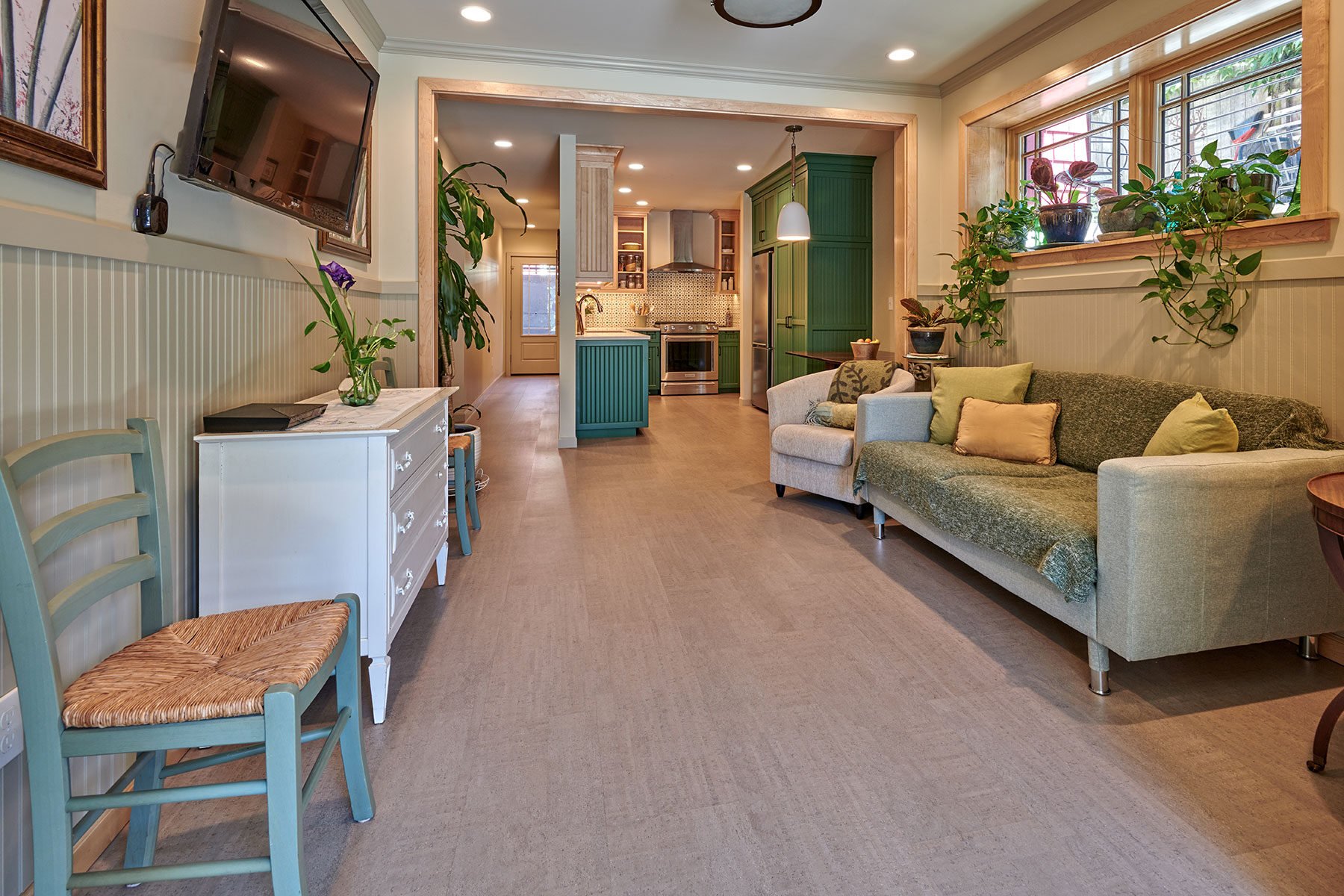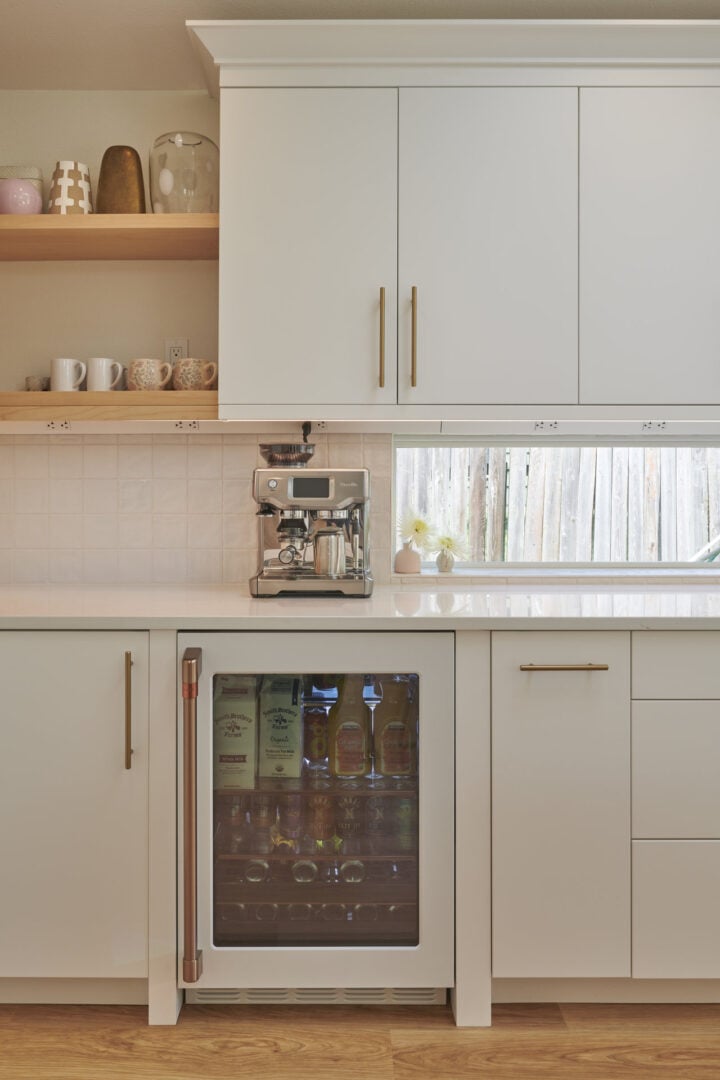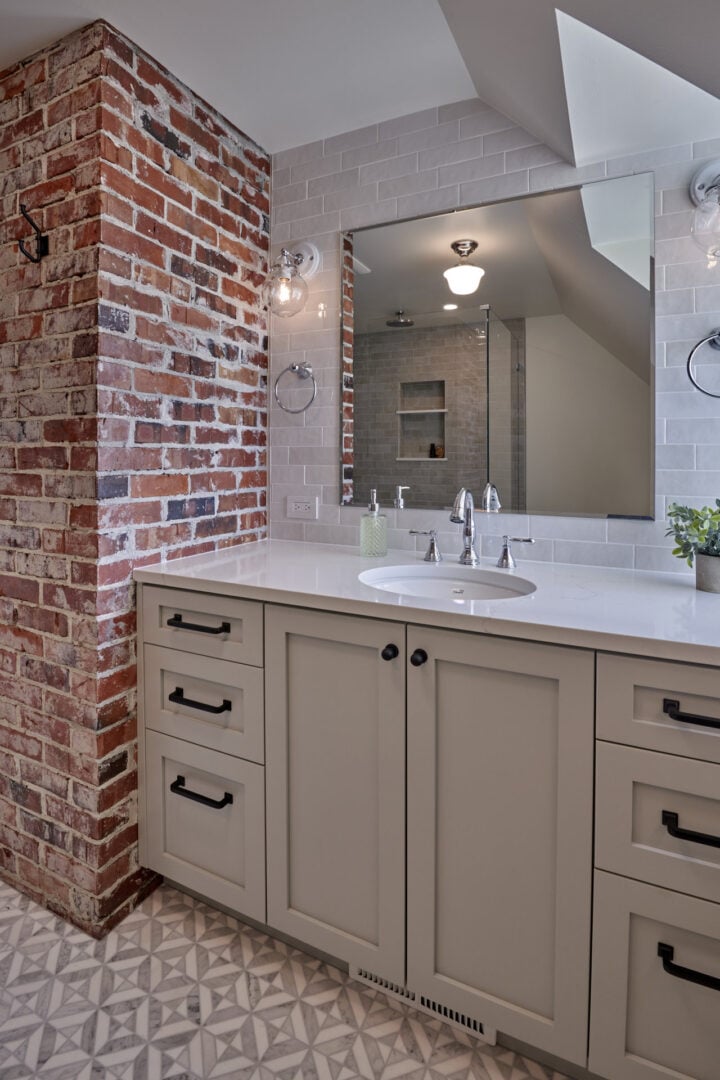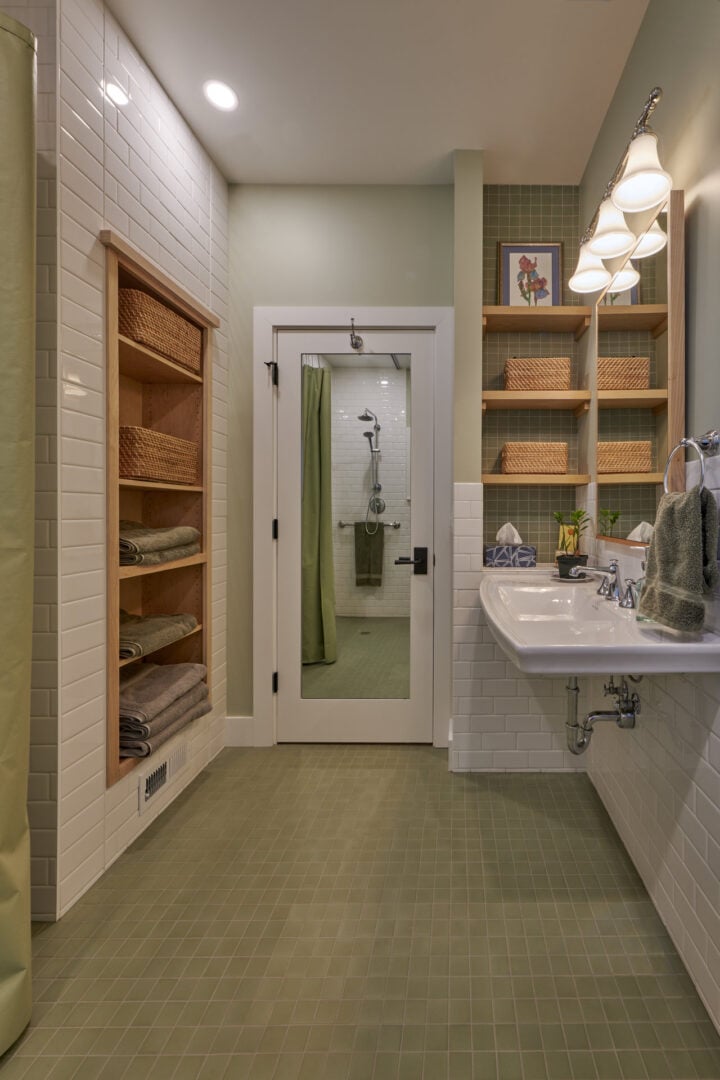
Basements are one of the most underutilized areas in Seattle homes while also being one of the biggest remodeling opportunities. Whether you dream of a media room, guest suite, home gym or income-generating ADU (or all of the above), finishing your basement can add livable space and long-term value to your home.
But remodeling a basement in the Pacific Northwest has its own set of challenges, from moisture and low ceilings to complicated permitting. At CRD Design Build, we’ve helped Seattle homeowners transform even the most awkward, dimly lit lower levels into bright, functional spaces.
Before you start hanging drywall or shopping for flooring, read these essential finished basement tips tailored specifically for Seattle homes.
Seattle Basement Remodel Guide: 7 Must-Know Tips Before You Start
1. Start with Moisture Control (Always)
Seattle basements are notorious for being damp and that moisture can wreak havoc on new finishes, furniture and even your health. Before any remodeling work begins, we recommend:
- Installing a sump pump if water collects during rainy seasons
- Sealing foundation cracks and applying a waterproofing membrane
- Using a dehumidifier to keep humidity levels under control
- Sloping landscaping away from the home to prevent water intrusion
Moisture control is the foundation of any successful basement remodel. Skipping this step can lead to costly damage later.
See also: Basement Remodel Contractors Near Me: How to Find and Hire the Best Pros for Your Project

2. Check Your Ceiling Height
Code requirements in Seattle typically call for a minimum finished ceiling height of 7 feet, though there can be exceptions depending on use. Older homes in neighborhoods like Wallingford, Ballard and Green Lake often have basements with low ceilings, exposed ducts or floor joists. If you’re tight on height:
- Opt for recessed lighting instead of pendants
- Use low-profile flooring like luxury vinyl plank (LVP)
- Talk to your contractor about lowering the floor or modifying structural elements if needed
3. Understand Seattle’s Permit Requirements
Finishing a basement often involves electrical, plumbing, insulation and sometimes structural changes. All of these updates usually require permits in Seattle.
Working with a design-build team like CRD means you don’t have to navigate the permitting process alone. We handle plan sets, submit applications and work directly with inspectors to keep your project on track. That’s just one of the many benefits of working with a design-build firm.

4. Plan the Layout Around Natural Light
Most basements have limited windows, which can make the space feel dark and cave-like if not designed properly. Here are a few of our best tips for bringing natural light into your finished basement:
- Add or enlarge egress windows to bring in more light and meet code for bedrooms
- Use glass doors, mirrors and reflective finishes to bounce light around
- Paint walls in light, warm tones to make the space feel more open
- Consider adding a door to the backyard or patio if grade allows
See also: What is a Daylight Basement? Daylight Basement vs. Walkout Basements Explained
5. Include Plenty of Storage
Basements often become the catch-all space for everything you don’t want upstairs like seasonal decor, sports equipment and playrooms. When finishing your basement, don’t forget to plan for storage so the space stays functional and clutter-free. Here are some of our favorite design ideas for adding storage:
- Under-stair drawers or cabinets
- Built-in shelving around entertainment or media zones
- Mudroom-style benches with hidden compartments near a basement entry
- Mechanical closets for HVAC or water heaters that double as storage space
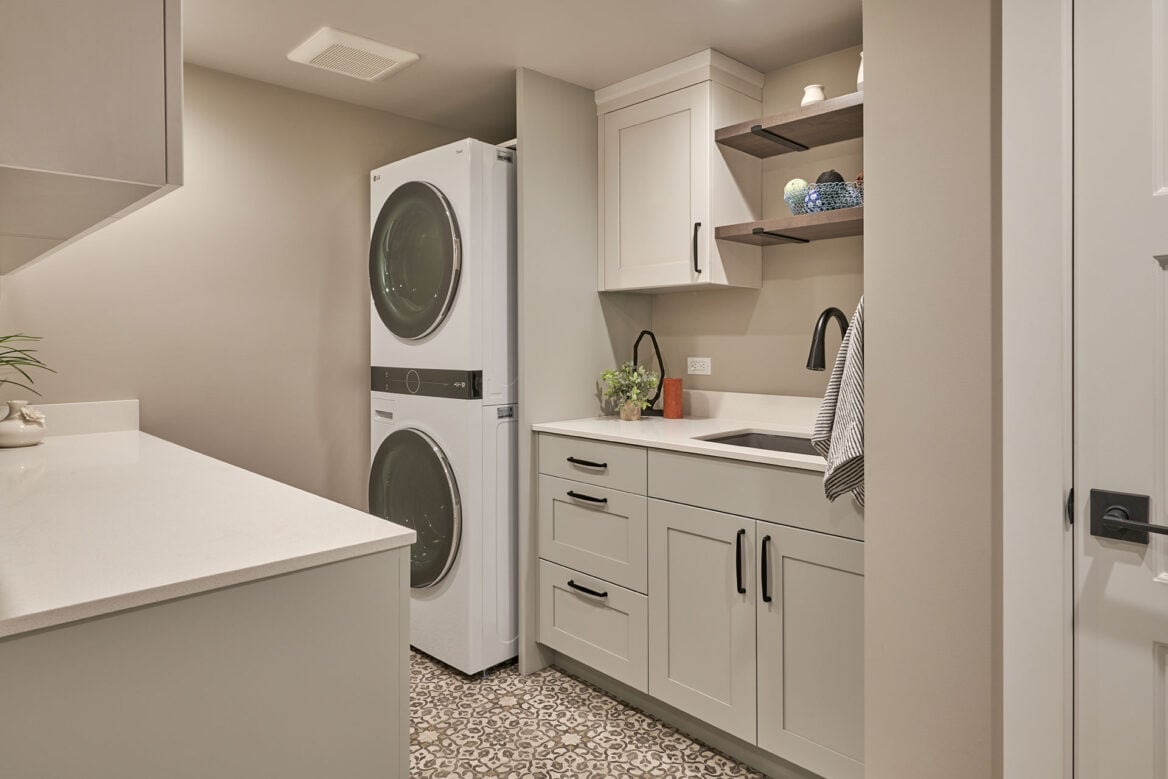
- Plenty of cabinetry for laundry rooms

6. Design with Flexibility in Mind
Today’s playroom could be tomorrow’s home office. A guest room might someday become a rental unit. That’s why one of our top finished basement tips is to design for the long term! We recommend that you consider:
- Installing a full or ¾ bathroom
- Adding plumbing stubs for a future kitchenette
- Creating a private entrance if you’re thinking about building a DADU or ADU
- Choosing neutral finishes that can evolve with your family’s needs
See also: Transforming Your Basement: A Complete Guide to Remodeling for Extra Living Space
7. Don’t Overlook Soundproofing
Basements can transmit sound both up and down. If you’re planning to use the space as a media room, game room or music studio, make sure your remodel includes adequate soundproofing, such as:
- Insulating between ceiling joists
- Using sound-dampening drywall or acoustic panels
- Installing solid-core doors for bedrooms or bathrooms
These simple upgrades go a long way in everyday comfort.
See also: How Much Does it Cost to Remodel a Basement: Factors, Estimates & Tips

Ready to remodel your Seattle basement? Finishing your lower level can completely transform how your home functions and boost its value in the process. But because every Seattle home comes with its own unique quirks, a one-size-fits-all approach just doesn’t work. That’s where CRD Design Build comes in! Our integrated design and construction team will guide you through the entire process—from assessing moisture and structural conditions to designing a layout that fits your lifestyle and navigating Seattle’s permitting requirements. We’ll help you build a basement that not only meets your needs today, but continues to serve your family well into the future.
Ready to take the next step? Schedule your free discovery call today to talk with our team about your basement remodel goals.