In Seattle, a mudroom isn’t a luxury, it’s practically a survival strategy. From October through May, the average household is managing wet umbrellas, muddy dog paws, rain-soaked jackets, and a rotating cast of boots that somehow never end up where they belong. Without a dedicated space to handle all of it, the chaos lands in your entryway, your coat closet, or worse, the middle of your living room floor.
But here’s the good news: a well-designed mudroom doesn’t require a large footprint. Whether you’re working with a small entryway, an underutilized corner, or considering a full addition, there’s a mudroom solution that can make your home dramatically more functional—and a lot easier to live in!
From Chaos to Order: Mudroom Ideas for Pacific Northwest Homes
What Makes a Mudroom Actually Work
The most effective mudrooms are designed around how your household actually moves through the space. Before you start saving inspiration images on Pinterest, ask yourself: What comes in the door with you? Coats? Backpacks? Sports equipment? Groceries? Pets? The answers should drive every design decision.
Here are the core elements that turn a mudroom from a pretty pass-through into a genuinely useful room:
The Landing Zone
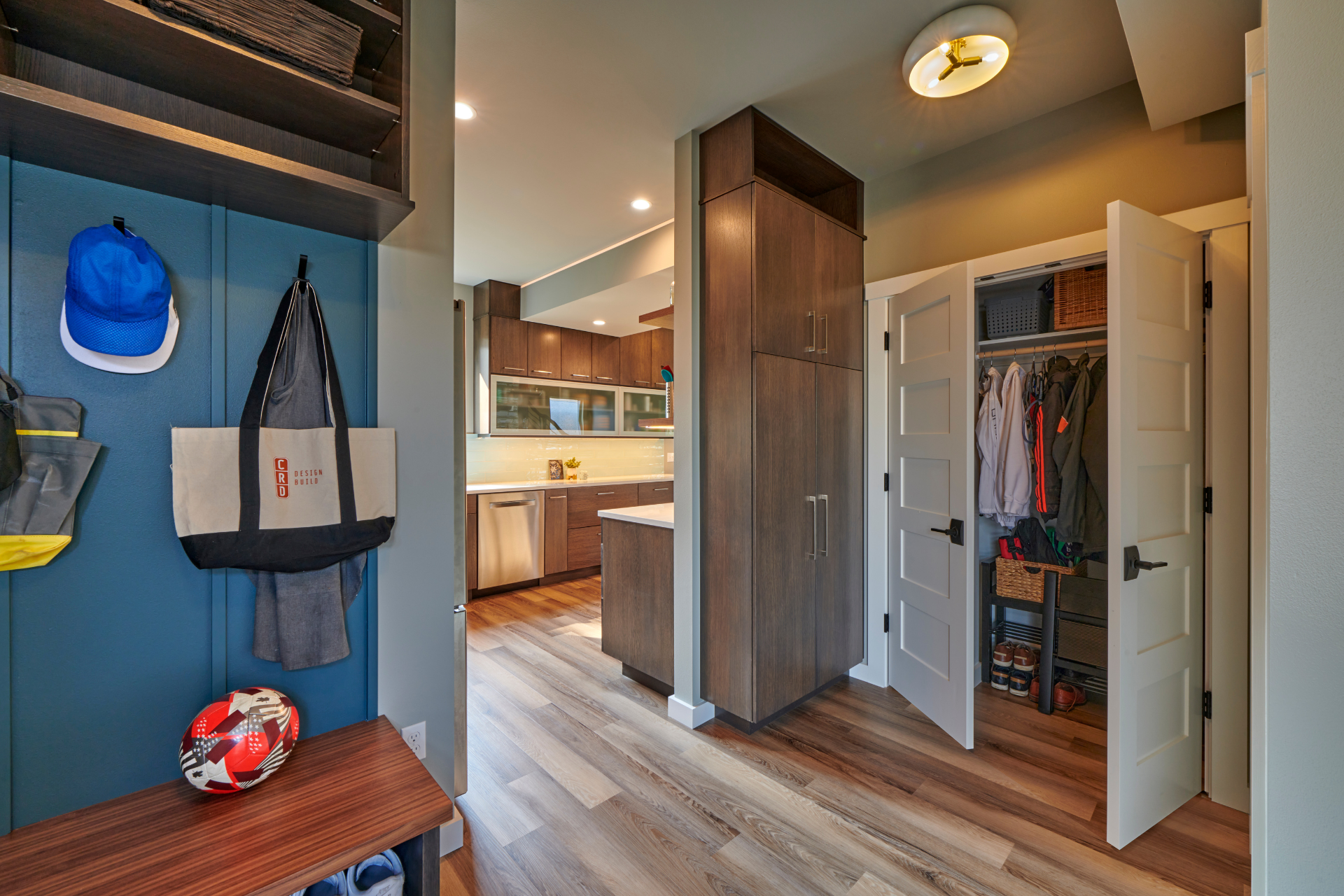
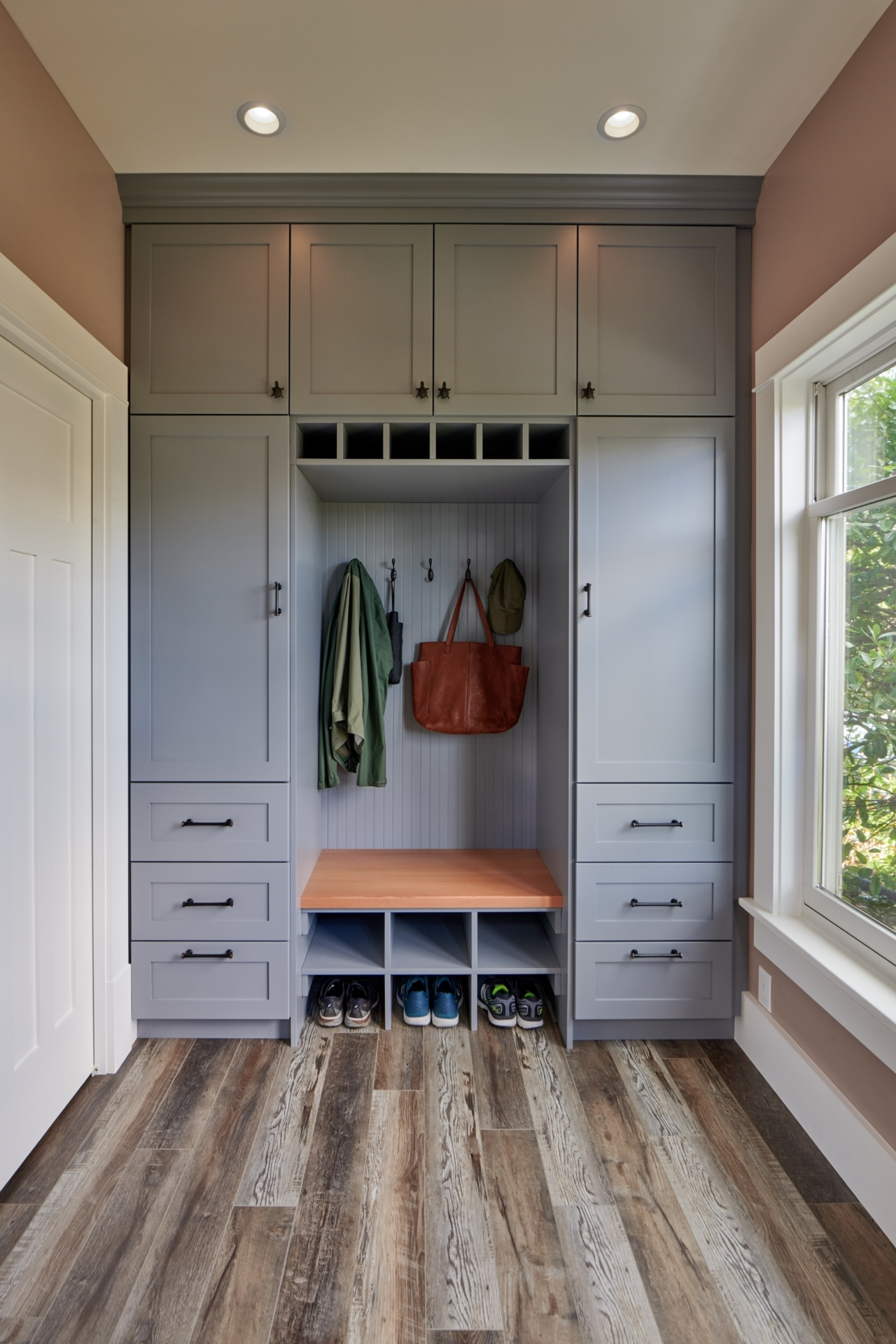
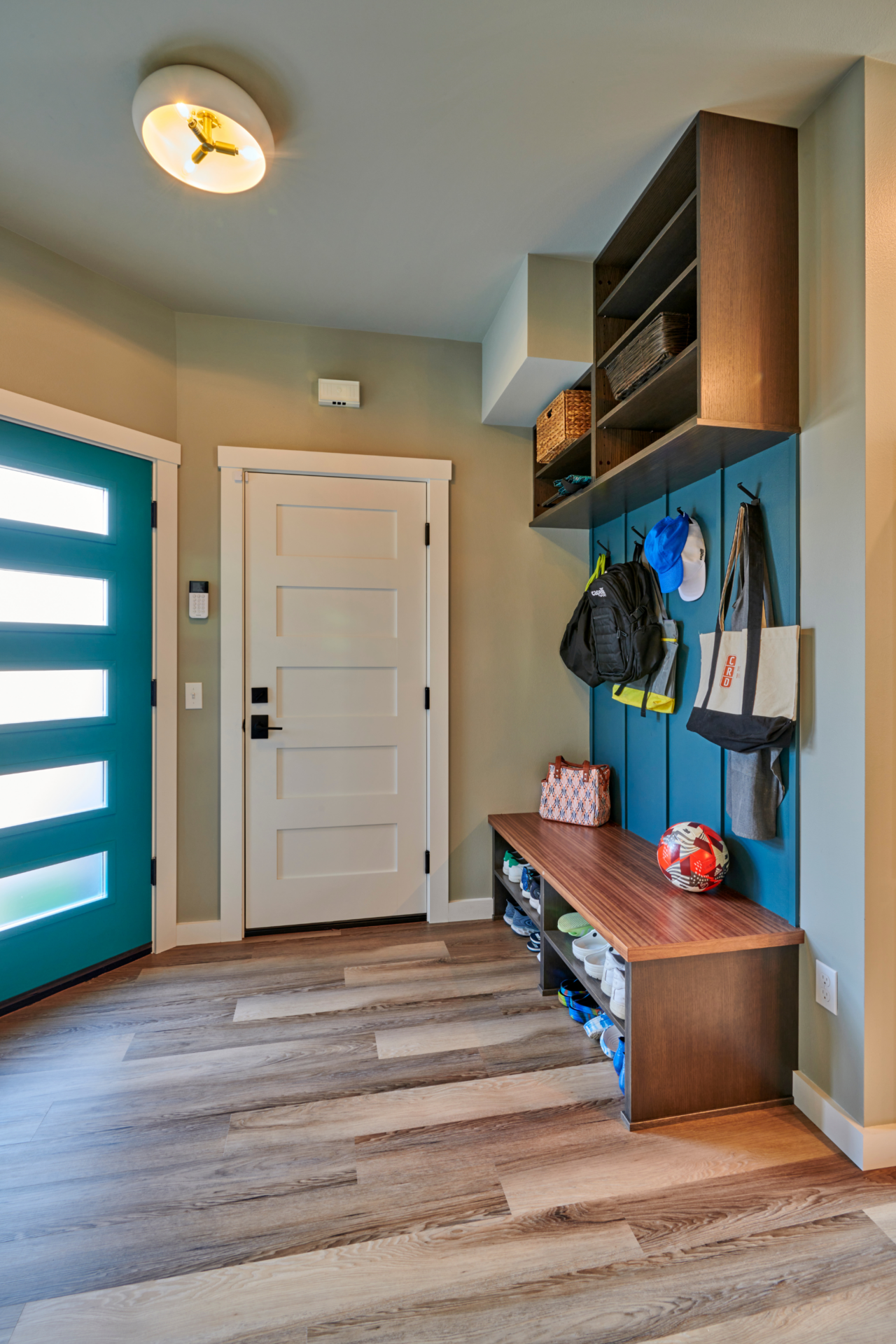
Every effective mudroom starts with a place to drop things the moment you walk in the door. A built-in bench with hooks above it is the classic solution that works because it’s ergonomic. You sit to take off shoes, hang your coat at eye level, and everything has a home before you’ve even taken three steps inside.
For households with kids, labeled cubbies or dedicated sections per family member are game-changers. For pet owners, a low hook for leashes and a designated spot for towels and gear makes a big difference in daily life.
Flooring That Can Handle the PNW
Your mudroom floor will take more abuse than any other surface in the house. It needs to be ready to handle wet boots, muddy paws, tracked-in gravel, and daily foot traffic — all without showing every mark.
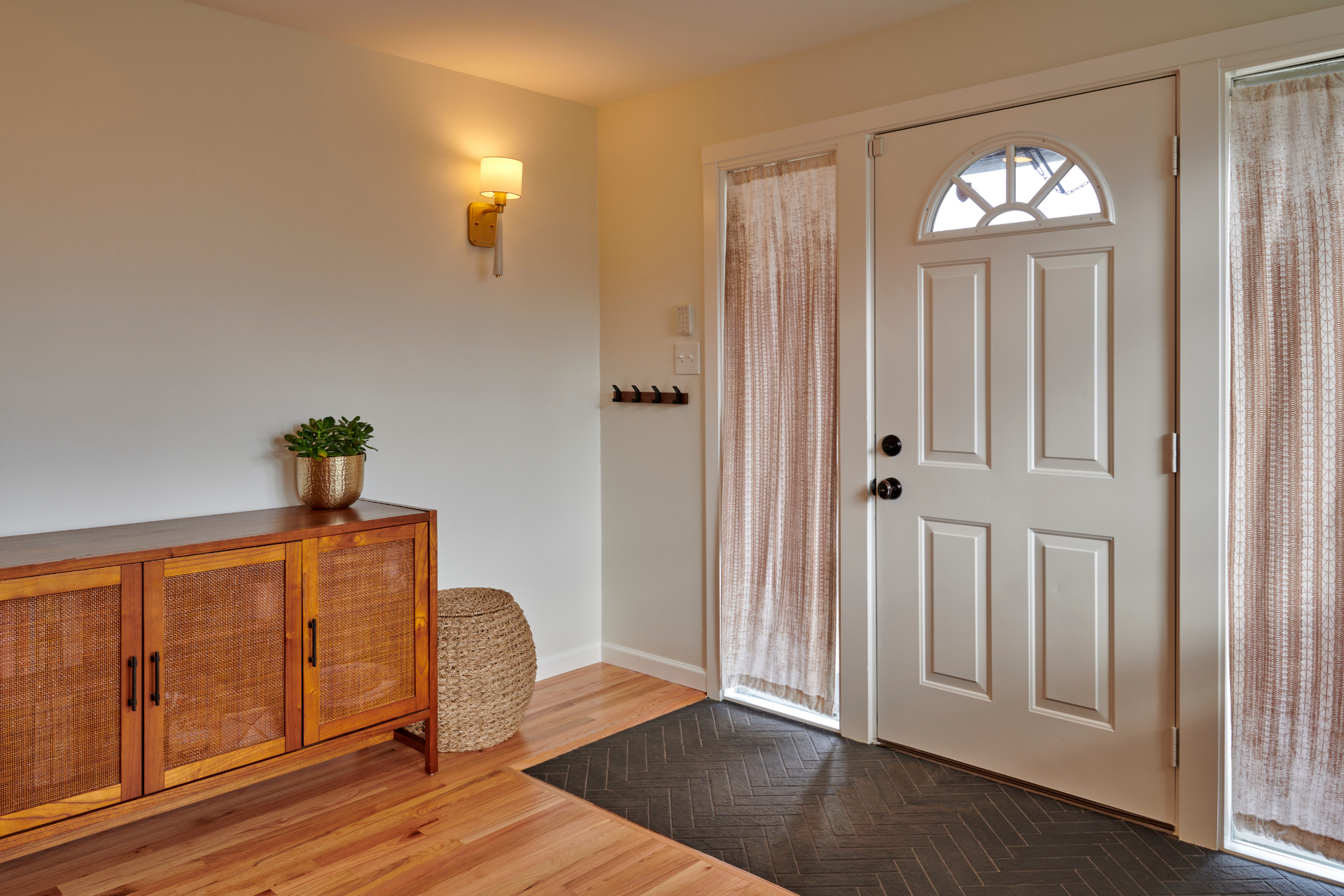
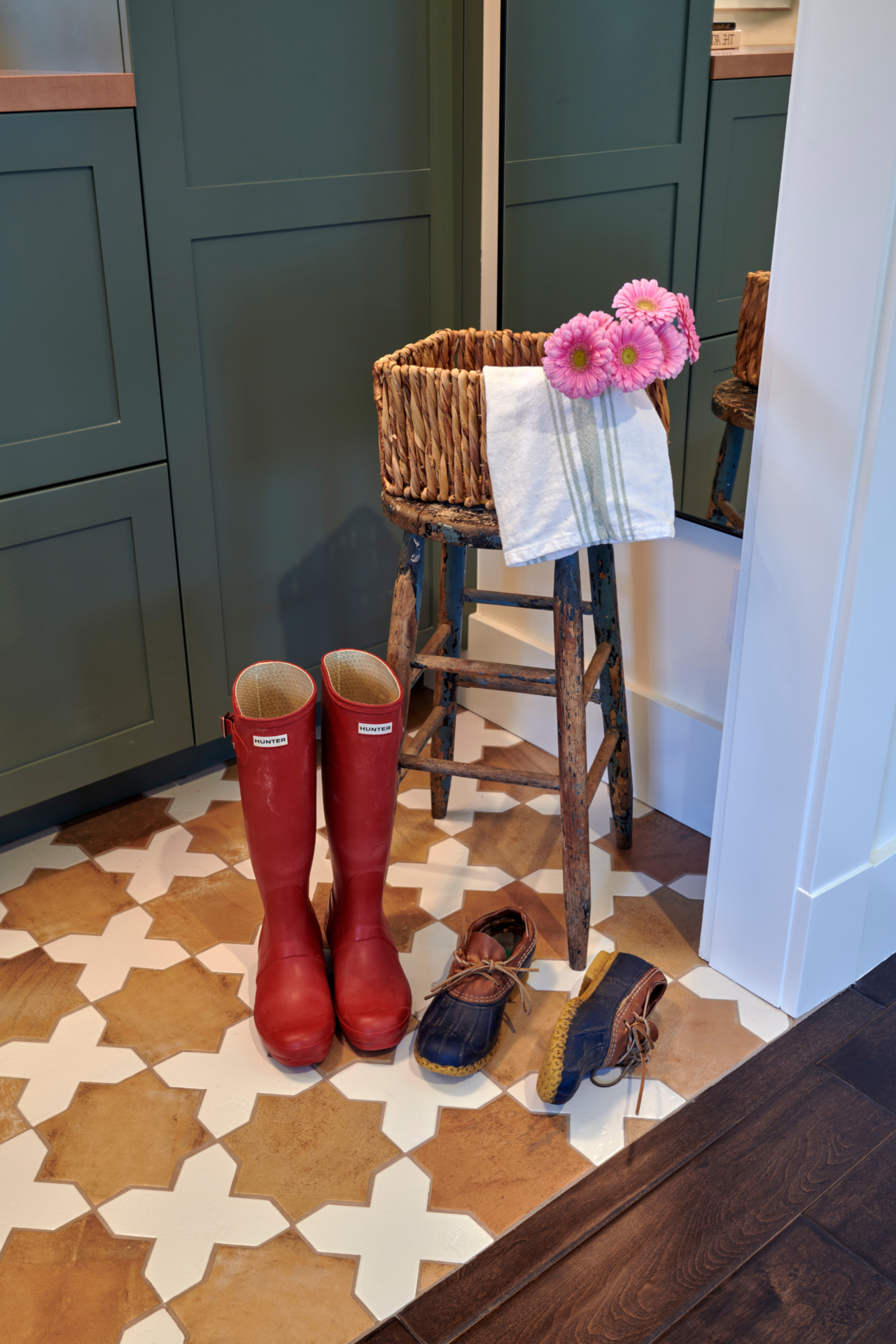
Porcelain or ceramic tile is the most practical choice: durable, easy to clean, and available in a huge range of styles. Larger format tiles in a matte or textured finish hide dirt well and look great in both traditional and contemporary spaces. If your home is older, consider a classic hexagon or subway tile to feel intentional and appropriate to the architecture.
Storage That Scales
Think beyond hooks! The best mudrooms layer multiple types of storage: overhead cabinets for seasonal items, lower cubbies or lockers for everyday gear, a bench with lift-up storage underneath, and closed cabinetry to hide what you don’t want on display.
If space is tight, floor-to-ceiling cabinetry on a single wall can accomplish a lot in a narrow footprint. Shallow depth is fine. For example, a 12-inch deep cabinet is plenty for most storage needs and keeps the room from feeling cramped and cluttered.
Light and Air
Mudrooms often end up in darker corners of the house, like near a side door, in a back hallway, or tucked behind the garage entry. A window, even a small one, makes a significant difference in how the space feels. Natural light reduces the sense of clutter and makes the room easier to use.
If a window isn’t possible, invest in good overhead lighting. A mudroom that’s dark and dingy discourages the organized habits that make it useful in the first place.
Project Spotlight: The Capitol Hill Craftsman Mudroom
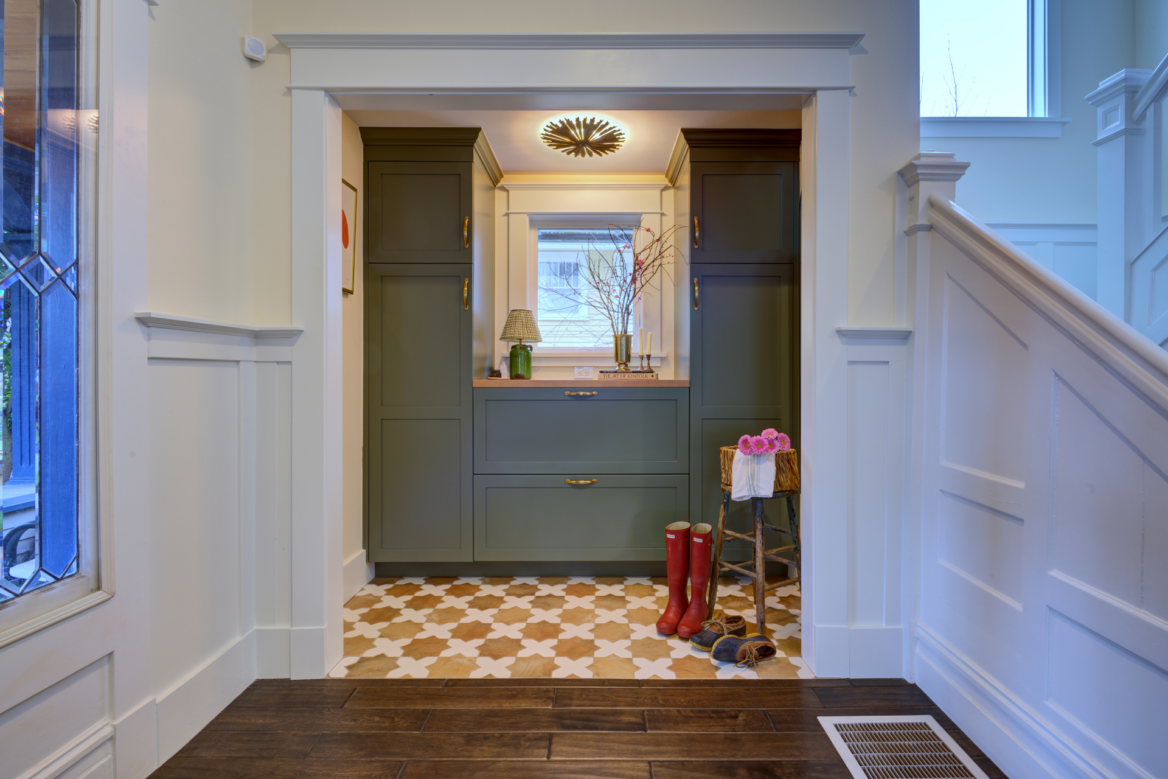
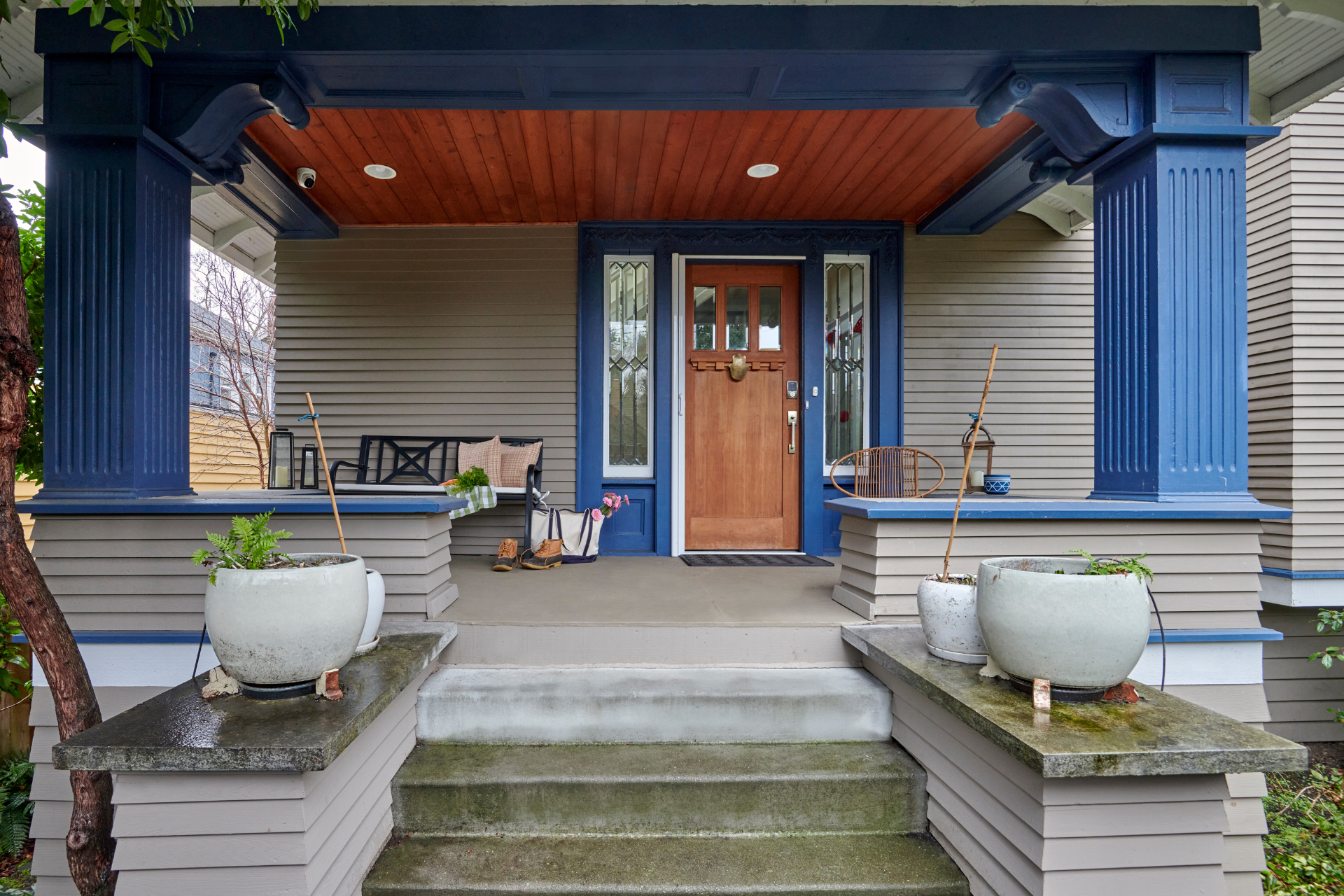
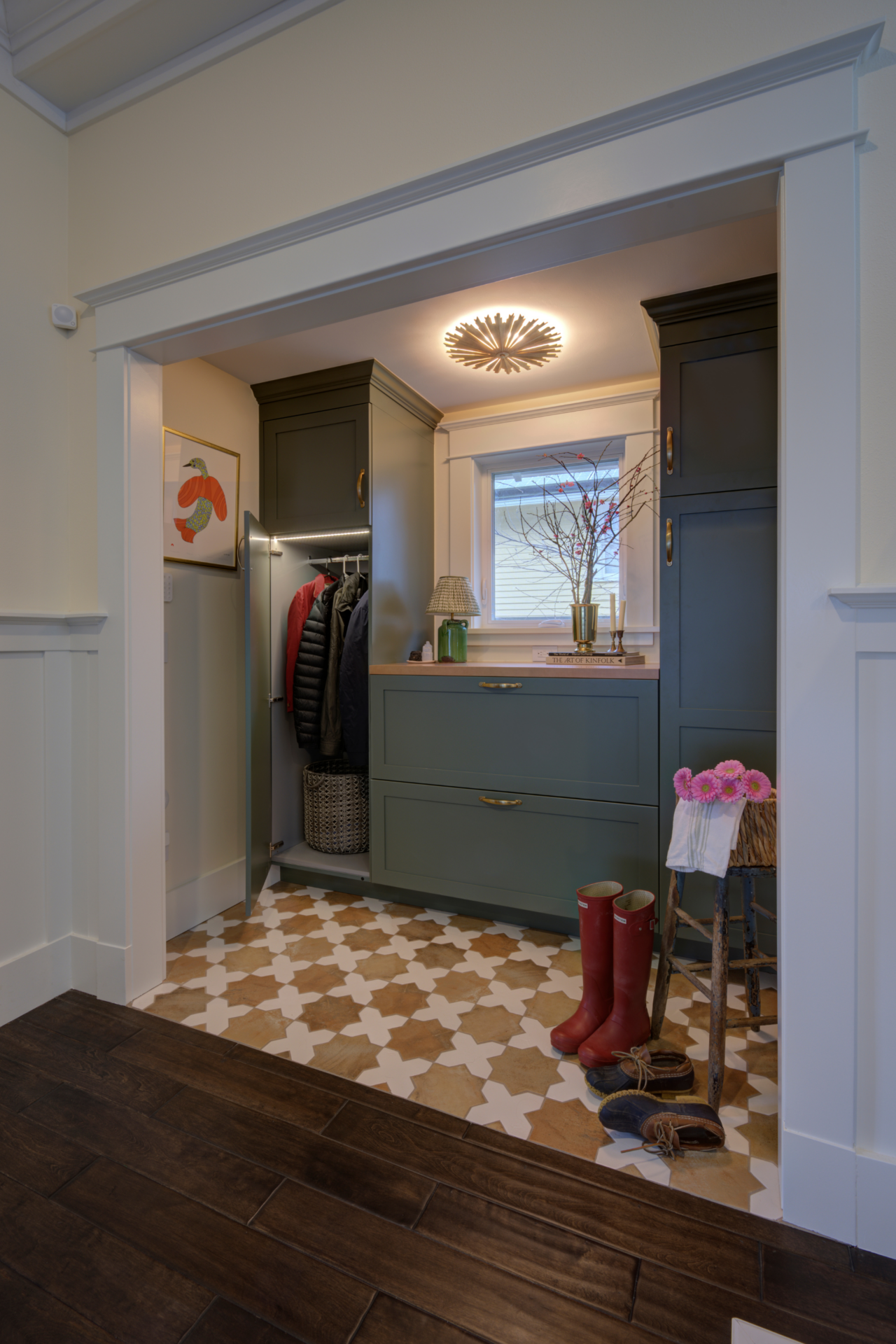
One of our favorite recent mudroom projects is this Stevens/North Capitol Hill addition, a 1908 Craftsman home nestled between Volunteer Park and the Arboretum. The home had a classic wraparound porch that wasn’t being used to its potential and the owners needed a proper entryway with storage for coats, shoes, and gear.
Our designer, Jan Fredrickson, captured a portion of that exterior porch space to create a new mudroom addition that looks like its always been part of the original structure. On the exterior, we matched the original siding and trim details so the addition reads as intentional, not tacked on. Inside, we installed durable tile flooring chosen specifically to handle wet umbrellas and muddy boots, along with custom cabinetry designed for maximum efficiency in a compact footprint.
A new window was added to flood the entry with daylight, keeping the small space from feeling tight. A cased opening with matching trim connects the mudroom to the main house, maintaining the home’s historic character while delivering fully modern functionality. The result: a landing zone that works beautifully for daily Seattle life, in a space that feels like it was always meant to be there.
When a Mudroom Requires an Addition
Some homes simply don’t have a natural space to convert into a mudroom, such as if the entry opens directly into the living room, there’s no side door, or every square foot is already spoken for. In those cases, a small addition is often the right answer.
Mudroom additions don’t need to be large. Even 60 to 80 square feet is enough to create a functional landing zone with a bench, hooks, storage, and tile floor. In older Seattle homes with covered porches, enclosing a section of the porch (like we did on the Capitol Hill project) is one of the most intentional approaches. You gain functional square footage without disrupting the home’s footprint or roofline.
A mudroom is one of those projects where the details really matter. The right storage configuration, the right tile, the right lighting can make the difference between a space you love and one that just gets messier over time. Our designers work through those details with you before a single cabinet is ordered. Contact CRD Design Build to schedule a complimentary consultation. We’d love to help you design an entry that works as hard as you do!