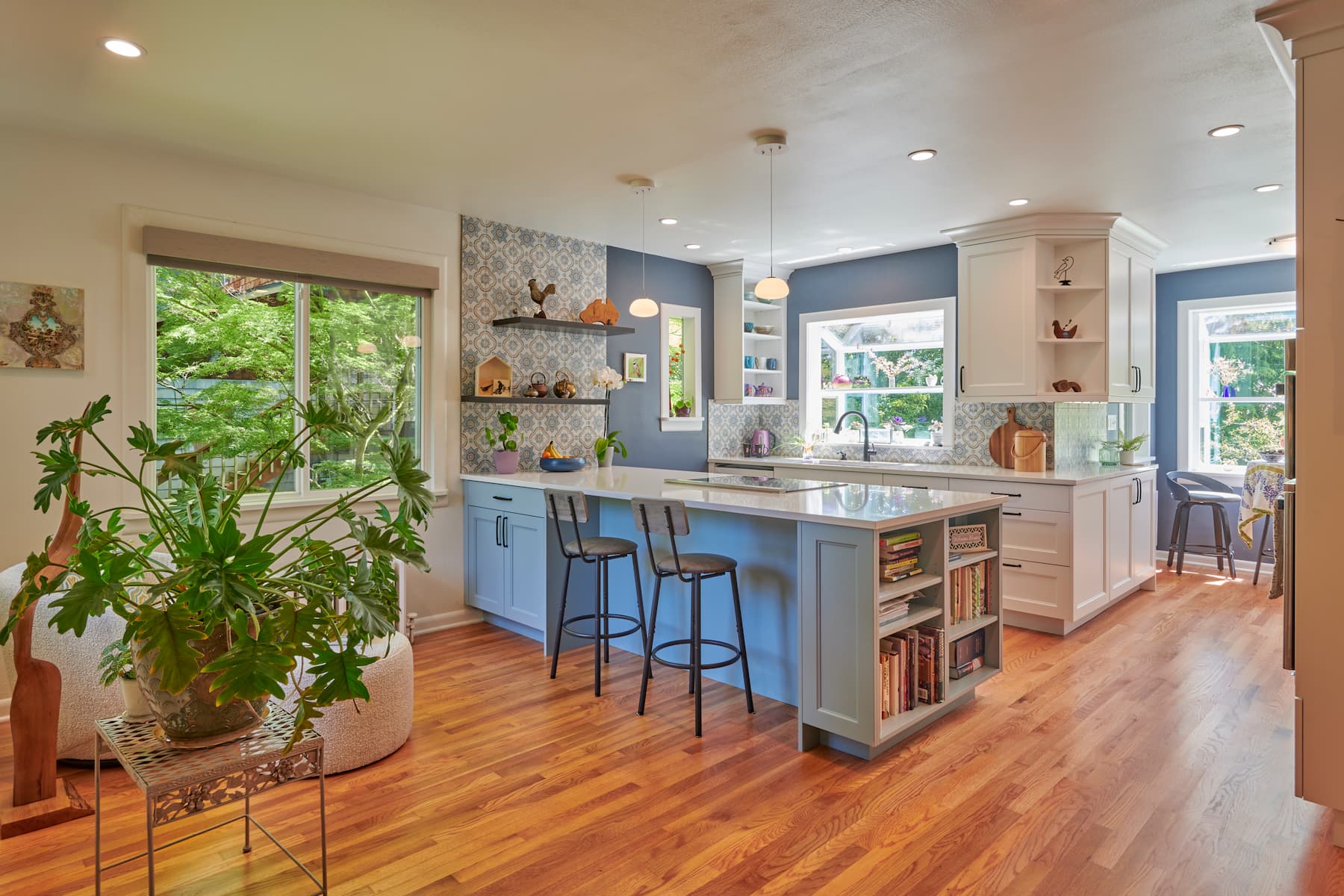
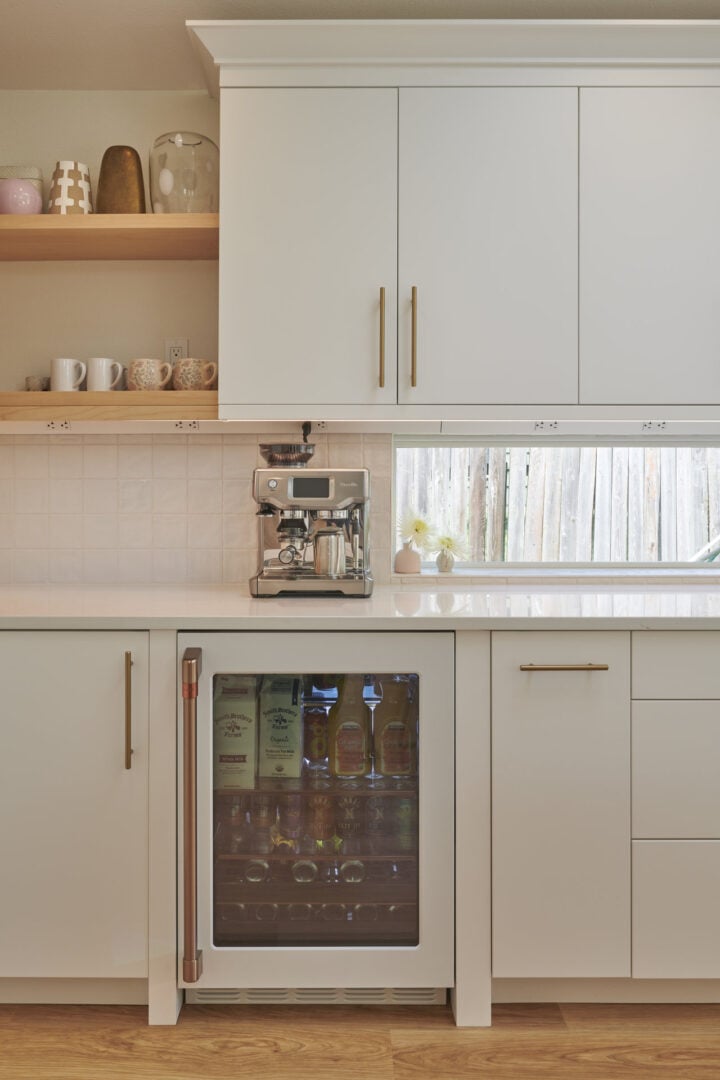
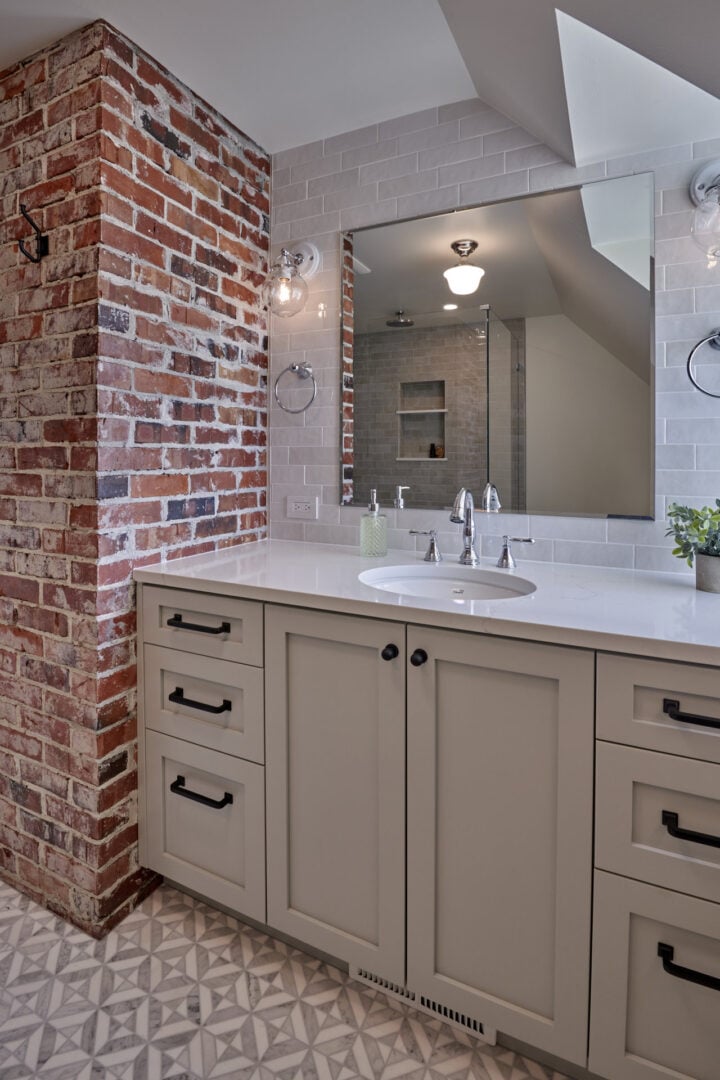
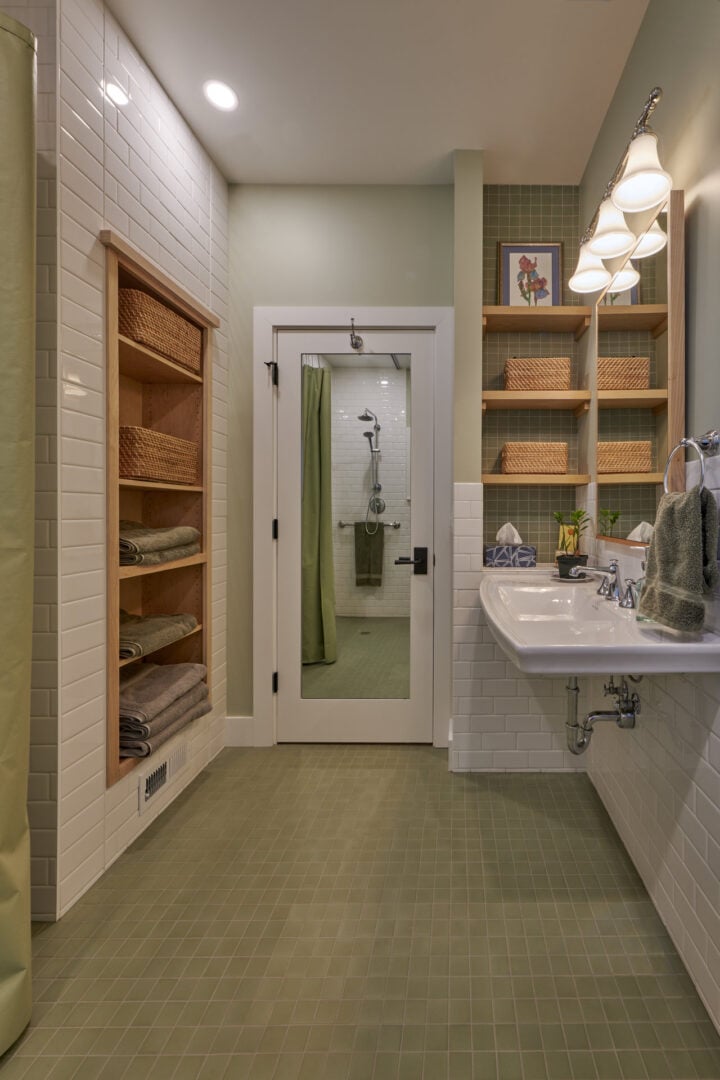
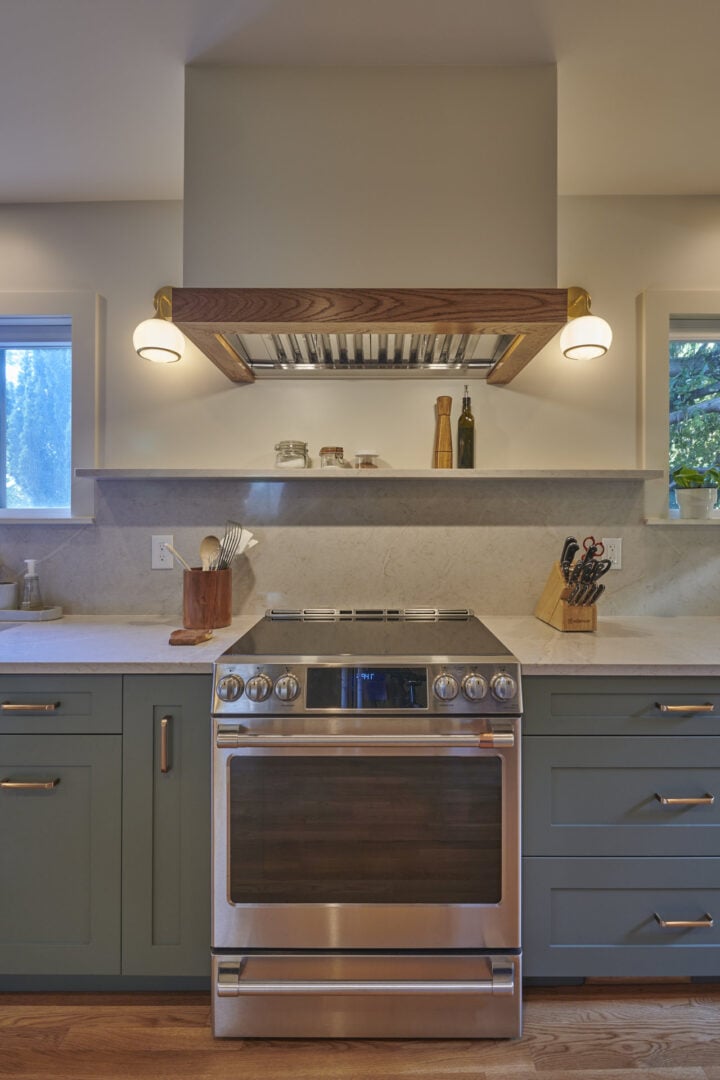
When designing a kitchen remodel, cabinets and countertops often get most of the attention. But from a designer’s perspective, kitchen floor tiles are just as important. Your flooring choice will anchor the entire space. This decision also impacts durability, maintenance and comfort, plus the overall visual tone of the kitchen.
In Seattle homes (where rain, mud and daily wear are realities), choosing the right kitchen floor tile isn’t just about aesthetics. It’s about function, longevity and lifestyle.
Here’s how we guide clients through selecting kitchen floor tiles that look beautiful and perform for years to come.
Our Design Team’s Guide to Kitchen Floor Tiles
Start with Function: How Do You Use Your Kitchen
Before we even look at samples, we always ask clients how they utilize their kitchen. Questions typically include:
- Do you cook daily?
- Do you entertain often?
- Do kids or pets run through the space?
- Is this an open-concept kitchen connected to living areas?
The best kitchen floor for a busy family will differ from what works in a lower-traffic space. We recommend that you factor in durability and maintenance when making the decision.
Porcelain: The Most Versatile Kitchen Floor Tile
Porcelain kitchen floor tiles are often our first recommendation. They are:
- Extremely durable
- Moisture resistant
- Scratch resistant
- Easy to clean
Porcelain kitchen floor tiles can also mimic natural materials like marble, slate or even wood, making them a flexible choice for both modern and traditional aesthetics.
In Seattle kitchen remodels, we’ve found that porcelain is especially practical because it handles moisture well and doesn’t warp like wood can.

Natural Stone: Beautiful, But Requires Care
Natural stone kitchen floor tiles, like travertine, slate or marble, bring unmatched texture and warmth to the space. However, stone kitchen floor tiles:
- Must be sealed regularly
- Can stain if not maintained
- Are typically more expensive
For homeowners who love patina and don’t mind maintenance, stone can be a stunning choice. But it’s important to go in with realistic expectations.

Large Format vs. Small Format Kitchen Floor Tiles
Just like when selecting a kitchen backsplash, tile size can dramatically affect the visual balance and feel of your kitchen. Here’s a quick overview that we hope you find helpful:
Large Format Floor Tiles
- Provide a cleaner, more modern look
- Minimize grout lines
- Make smaller kitchens feel larger
Small Format Floor Tiles
- Add texture and character
- Work well in Traditional or Craftsman homes
- Provide more slip resistance
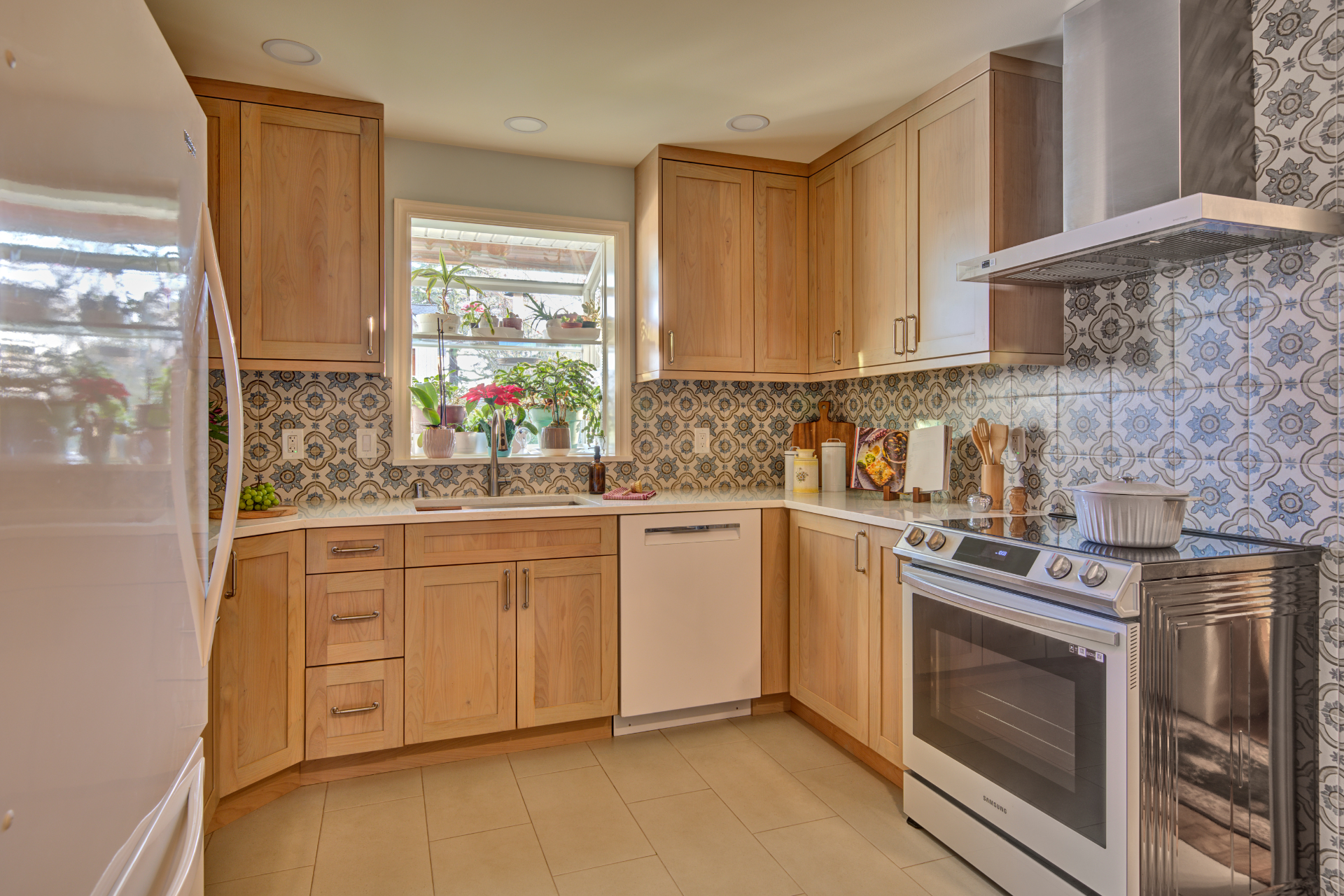
In many Seattle homes, especially older craftsman styles, we often use classic patterned or smaller kitchen floor tiles to complement architectural detailing.

Grout Matters More Than You Think
When choosing floor tiles, grout color and width are just as important as the tile itself! We’ve found:
- Dark grout hides stains better
- Light grout creates contrast
- Narrow grout lines look modern
- Wider grout lines feel traditional
We often recommend high-performance grout options for kitchen floor tiles to reduce staining and simplify maintenance.

Slip Resistance & Safety
Kitchen floor tiles should not only look good, they also need to feel safe underfoot! We recommend that you look for:
- Textured finishes
- Matte surfaces
- Higher slip-resistance ratings
Glossy kitchen floor tiles may look beautiful in a showroom, but in a real working kitchen, they can become slippery—especially near sinks or dishwashers.

Kitchen floor tiles set the foundation, literally and visually, for your entire remodel. The right choice improves day-to-day function, complements cabinetry and countertops and holds up to real life.
At CRD Design Build, we help Seattle homeowners create spaces that align with their lifestyle, design goals and long-term needs. If you’re planning a kitchen remodel and want expert guidance, we’d love to help. Schedule your complimentary discovery call and let’s design a kitchen that works beautifully for your family!