Q: Do I need a permit to finish my Seattle basement?
A: Yes, usually.
Finishing or remodeling a basement in Seattle can be one of the most cost-effective ways to add usable living space without a full home addition. Whether or not you need permits from the City of Seattle depends on the scope of your basement remodeling project. For all but the smallest basement renovation jobs, you or the contractor(s) you hire will need to apply for three permits. Here’s our helpful guide to help you understand what types of Seattle basement permits you might need.
Do You Need a Permit to Finish a Basement in Seattle?
Whether or not you need permits from the Seattle Department of Construction & Inspections (SDCI) depends on the scope of your basement remodeling project. For anything beyond cosmetic updates, you (or your contractor) will likely need to apply for multiple permits.
Basement Projects Under $6,000 May Not Need a Permit
Most building projects in Seattle require permits, but there are some exceptions for very minor repairs and projects. According to the City of Seattle:
You don’t need a permit for minor repairs or alterations that cost $6,000 or less in any 6-month period. The $6,000 limit is based on fair market value of labor and parts, even if you do the work yourself.
But here’s the catch: even if your basement remodel costs less than $6,000, you may still need a permit if the work involves:
- Load-bearing walls or structural supports
- The building envelope (exterior walls, roof, etc)
- Egress, light, ventilation or fire resistance
See also: How to Cut Your Second-Story Addition Budget in Half
When You Might Not Need a Basement Remodeling Permit in Seattle
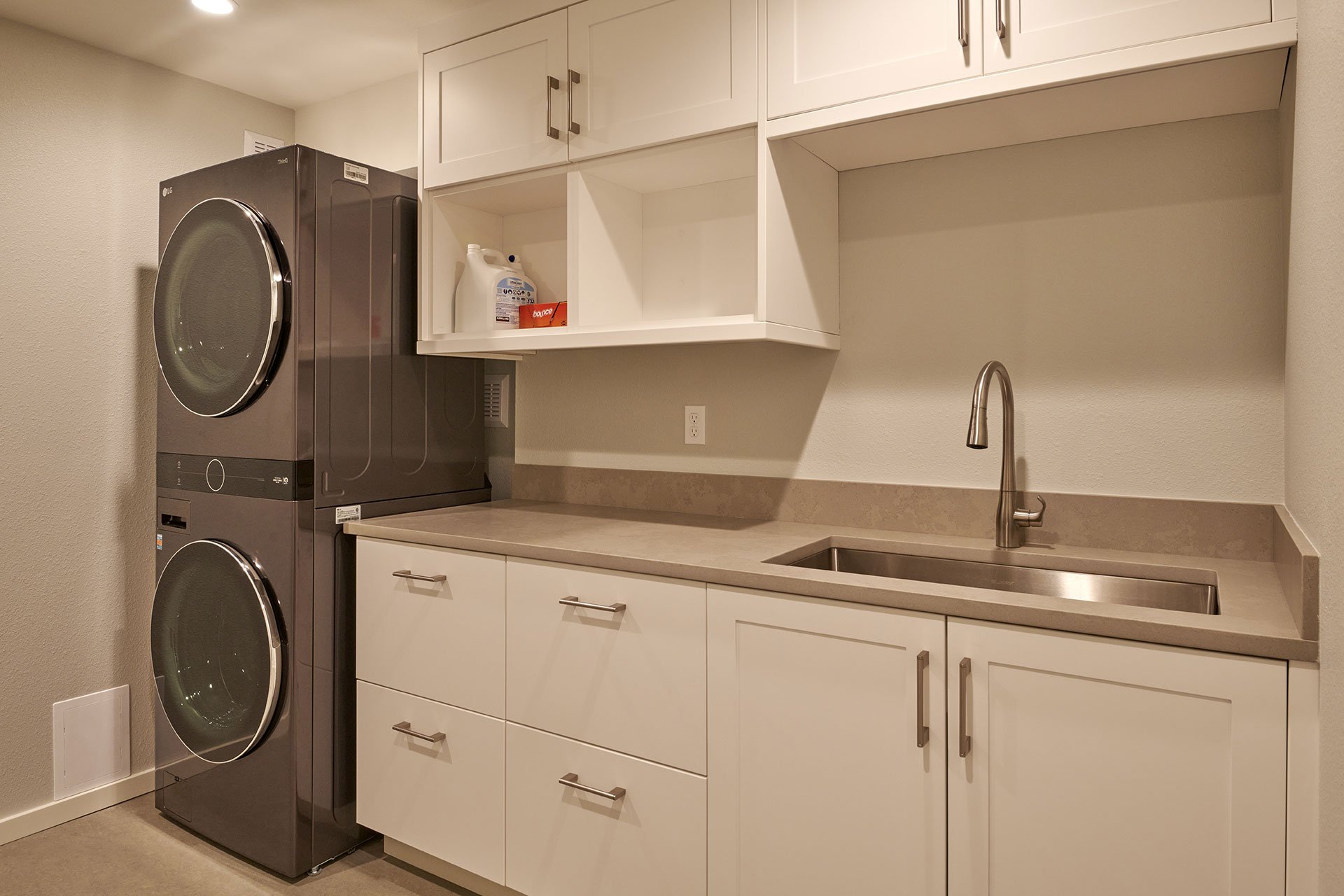
If your basement was previously finished, and you are just replacing the flooring, repainting the walls, and upgrading certain plumbing and electrical fixtures, and the total cost of the project is under $6,000 (including the value of your labor), you might find that you don’t need a permit. This is especially true if your new plumbing and electrical fixtures, like your faucet and lights, are connecting right to the existing lines and junction boxes, and you aren’t moving or adding any electrical outlets.
A Good Rule of Thumb
In our experience, however, most Seattle homeowners opt for recessed can lights in their basement, which do require a permit to install.
A good rule of thumb to determine whether you will need permits for a basement remodel is whether you will be touching anything behind the walls or changing the layout If that’s the case, you’ll likely need three types of permits:
- Plumbing permit
- Electrical permit
- Building permit

Seattle Basement Remodel Permit Contact Info
If you are ever unsure whether you need a permit for your basement renovation project, you should contact the Seattle Department of Construction & Inspections. In fact, it is a good idea to contact the city before you start any building project, even if you think you don’t need a permit!
Phone: 206-684-8850
Online: Ask Us a Building Permit Question [Seattle Department of Construction & Inspections]
In person: Applicant Services Center
700 5th Avenue, 20th floor [map it]
M, W, F: 8:00 a.m. – 4:00 p.m.
T, Th: 10:30 a.m. – 4:00 p.m.
(arrive before 2:00 p.m. for walk-in service)
Basement Remodeling Permits You’ll Likely Need in Seattle
Plumbing Permit (~$300)
You might not need to pull a plumbing permit if you just plan to switch out your existing basement toilet or faucet for a new one, but you will definitely need one if you are adding a basement bath or changing the layout of an existing one. Other upgrades that would require a plumbing permit would be to reroute pipes to fit your new basement floor plan or to switch from galvanized pipes to copper or PEX. In fact, if you touch any of the plumbing behind the walls, you must get a permit.
Electrical Permit (~$300)
Only the most superficial electrical updates can be made without a permit. The city may allow you to swap out a lighting fixture or outlet for a new one, but if you need to move any junction boxes or touch any of the wiring behind the walls, you are going to need a permit (and the help of a licensed electrician). And for good reason. Would you really want to risk letting an unqualified person do un-inspected electrical work in your home? You could risk fire, electrocution, fines, and other problems.
Building Permit (~$800, depending on the value of your project)
If your project requires an electrical or plumbing permit, it’s likely going to trigger the need for a building permit as well. A typical basement remodel will probably require you to open up walls, remove old fixtures, and flooring. A more extensive basement renovation may require you to add or remove load-bearing walls, make alterations to your foundation, or even dig down to add ceiling height.
All of this work requires a building permit. Thankfully, basement projects that are more limited in scope can usually qualify for a STFI (Subject-to-Field-Inspection) permit, which Seattle issues for simpler projects that do not require a full plan review. You can walk into the Seattle Department of Construction and Inspections, show them your drawings, and walk out with your permit the same day. You can find tips about these permits and the fee schedule here.
If your project requires engineering (for instance, if you move any load-bearing walls), expect the city to require a full plan review.

Hear Our Team Weigh In

Ep. 113: Basements 101 with Matt Scully and Andrew Phillips
Seattle Basement Remodel Inspections
Some of the fees you pay when you apply for a Seattle permit go toward inspections. The city will send out its inspectors to check on the work being done, usually at key milestones during your project. For instance, before any open walls are covered in drywall, the electrical inspector will want to check the wiring, the plumbing inspector will want to check the pipes, and the building inspector will want to check the framing, insulation, and other things.
You will need another round of inspections when your project is complete. It’s up to you or your contractors to schedule these inspections. If all goes well, you will know you have a safe and well-built finished basement that is code-compliant.
If you received a STFI building permit (see above), it’s up to the inspector to make sure you’re meeting current building codes rather than an office worker closely reviewing your plans before they get built. This can be a big time-saver, but it means the contractors you work with need to be well-versed on building codes, or you could have to spend extra to do the work over.
See also: Can I Deduct a Remodel on My Taxes?
Why You Should Avoid Unpermitted Basement Work
Finishing or remodeling a basement can seem simple compared to more complicated rooms in the house, like the kitchen. This may tempt you to do the work yourself or hire a handyman. DIY is great, if you have the skills and the time. You do still need permits, however.
Hiring a handyman can work well if he or she is skilled and is licensed as a contractor. If you’re installing drywall and flooring to a previously unfinished basement, a handyman might be a fine choice, although the work might look like it was done by a handyman rather than a professional carpenter and qualified subcontractors.
The real risk is when a handyman acts as a general contractor, but offers to save you money by doing the work on the sly, without permits. It’s unlikely that you could do a full basement remodel without touching the wiring, for instance, and if a handyman offers to put in new outlets or open up the walls without the proper permits, it’s illegal, plain and simple. If you proceed with un-permitted work, you will be exposing yourself to risks.
Here’s what Zillow writes on the topic:
If a permit is needed and you fail to get one, the city may discover this at some time in the future and getting a permit retroactively can frequently be significantly more expensive and much more problematic than having obtained the permit before work commenced.
If work is not done in accordance with city procedures or if the inspector is unable to determine if the work has been done properly, the homeowner could be required to open walls, tear up floors, so that the inspection may take place. In addition, by law, work not permitted where a permit was required must be disclosed to any prospective purchaser. This may cause the owner to discount their sale price or perform costly or time-consuming repairs before title can be transferred.
One more reason to avoid the un-permitted route is that no reputable electrician or plumber will want to work on an illegal job. It’s common for Seattle building inspectors to be on the lookout for work trucks pulled up in front of houses and knock on the door to make sure the owner or contractor has the proper permits. You can be fined $500 a day; subcontractors face even steeper fines and could lose their license after just a few violations. It’s little wonder the good ones choose to avoid that risk.
See also: Construction Without a Permit [Seattle Department of Construction & Inspections]

Play It Safe: Hire a Reputable Contractor and Get Permits
Luckily, following the rules and avoiding fines (or worse) is simple. A reputable remodeling contractor or design-build firm will likely take care of all the details and pull the required permits for you. Working with a reputable company may cost a little more in the short term, but it will pay off in the long term and greatly reduce your risk.
And if you want to reduce the cost per square foot of your basement remodel, here’s a tip: combine it with other projects in your house, like a bathroom or kitchen remodel. You’ll have a parade of subcontractors and inspectors coming through your door, and it’s far more cost effective to have them addressing multiple areas of your home at once.
Still have questions about basement permits in Seattle? We’d love to help! Whether you’re planning a full Seattle basement remodel, a daylight basement conversion, or just updating finishes, CRD Design Build is here to guide you through the process. Contact us today to get started.